The exact page text, read by your browser's voice.

1925 — present
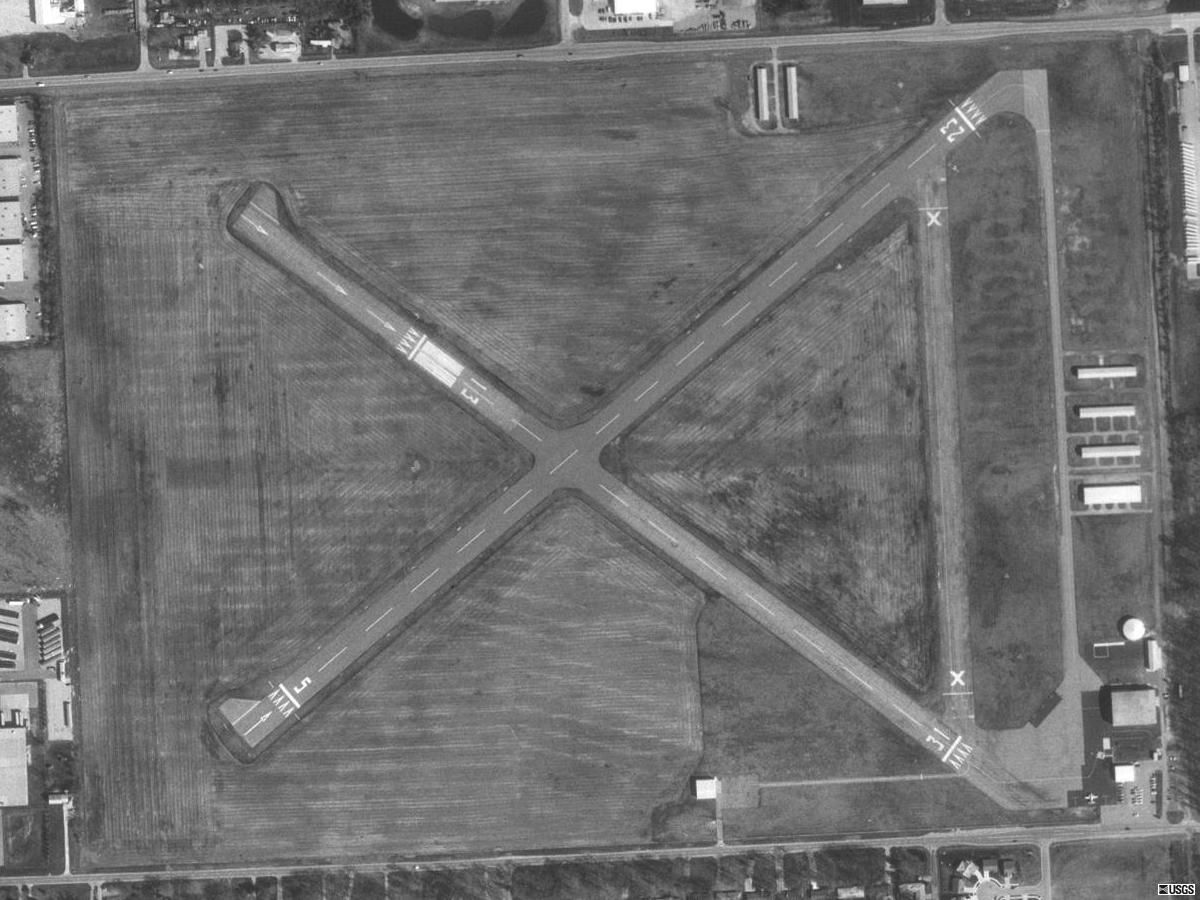
Fort Wayne's first municipal airport: The field was purchased by the City of Fort Wayne in 1925, and on 25 June of that year it was dedicated as the Paul Baer Municipal Airport — the city's primary airport, named for Fort Wayne's First World War ace while Baer was still alive and flying. A $100,000 bond issue in February 1928 paid for the formal planning of the runway and taxiway system by A. K. Hofer, a layout the Park Service notes is still in use; New Deal labor then rebuilt the place in layers — the Civil Works Administration funded 13,108 man-hours on the field in 1933 alone, the Works Progress Administration followed in 1935 and 1936 with concrete pavement, lighting and radio equipment, and the nomination sums the Depression-era improvements at $311,058.42 from federal and county relief sources, calling old Baer Field one of the largest WPA projects in Indiana. In 1944, with the airlines gone south (below), its great heated Hangar 2 — the hangar with the rotating carousel door, built to a Clark W. Smith patent of which the Park Service calls this the only example ever built — became a production center for the Interstate Aircraft TDR-1 assault drone, an early guided weapon assembled on a civil airport in the middle of a war its own field had been passed over for. The name it carries came out of the 1941 settlement told in the next entry but one. Its significance, as the National Register states it, is that northeastern Indiana's primary commercial aviation facility stood here for sixteen years, 1931 to 1947, and that the ground served as a municipal airport for seventy-seven of them. The airport authority today lists Smith Field as the designated primary reliever airport for Fort Wayne International, with two asphalt runways — 5/23 at 3,124 feet and 13/31 at 2,922 — and it is commonly described, by the authority, the Park Service and the aviation press alike, as one of America's oldest surviving aviation sites; AOPA's phrasing is "one of America's oldest surviving airports," and the field's own advocates told the city's preservation board in 2005 that its runways were, to their knowledge, the oldest in America still operating in their original configuration and construction — a claim this history carries as the advocates stated it, not as a surveyed fact.
Sources:
- National Register of Historic Places nomination, Smith Field (2002) — the 1925 purchase and 25 June dedication, the significance statement (primary commercial facility 1931–1947), the New Deal improvement figures.
- National Park Service, "Smith Field" — the 1928 bond issue and Hofer runway plan, the carousel-door Hangar 2, the 1944 TDR-1 drone production.
- Federal Aviation Administration airport record for SMD; Fort Wayne–Allen County Airport Authority (smdairport.com) — present runways and reliever designation.
- AOPA, "Smith Field: Airport of dreams" (17 April 2014) and "Airport stories: Smith Field" — the "oldest surviving" phrasing in the aviation press.
- Associated Press, via aviationpros.com (August 2005) — the SMDfund letter's "oldest known runways" claim, as stated by the advocates.