The exact page text, read by your browser's voice.
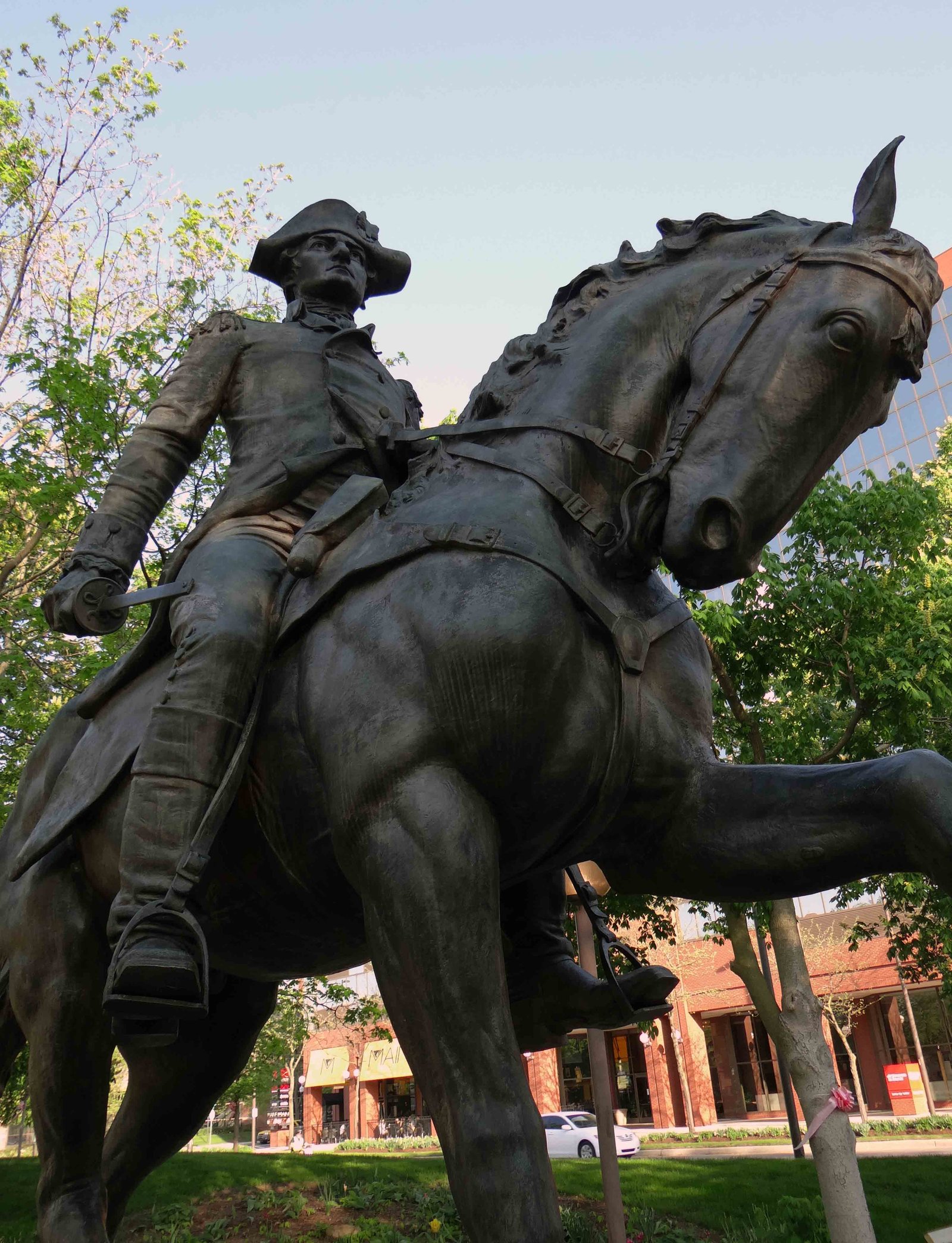

The generation after the plan filled in its frame. In 1918 the Anthony Wayne statue was dedicated in Hayden Park at a cost of $15,000, the first public swimming pool opened in Lawton Park, and Memorial Park was established in honor of the military dead of the World War. In 1921 a statue of General Lawton was dedicated in Lakeside Park, and in 1922 the statue of Colonel David N. Foster — "Father of the Park System" — took its place; that same year a swimming pool was built in Swinney Park. The department became a recreation department in fact in 1923, when the park board took over all summer playgrounds from the school board, with the community centers and other recreational activities. Foster Park grew by purchase and gift through the twenties (120 acres bought in 1924, 30 more donated in 1926), its golf course — the city's first public course — built from 1926 and opened in 1928; the city issued its first park bonds in 1927; in 1928 the Lakeside gardens were named a National Rose Garden, Lakeside won national recognition for the first municipal fish hatchery, and a Japanese garden was developed in West Swinney (renamed the Jaenicke Gardens in 1942). A tea house pavilion rose in Swinney in 1930.
The era's largest gift was Franke Park. In August 1921 John Bohn Franke, president of the Perfection Biscuit Company, bought the eighty-acre Kraeger-Wallace woods to protect it from subdivision, and in December gave it to the city on conditions, the first being that it "be forever used as a public park, free to all the people," and the tenth that the grounds "shall be known as the John B. Franke park." Arthur A. Shurtleff's general plan for the park followed in March 1926; a small man-made lake came in 1939, used for skating through the forties. The Depression decade, in the department's own chronology, is a decade of gifts rather than of federal work projects — the McMillen family's gift of the original seventy-four acres of McMillen Park in 1937 is its largest entry — and no WPA or CCC project in Fort Wayne's parks is named in the sources this chapter rests on. In 1941 the department hired its first full-time recreation director.
Sources: Fort Wayne Parks and Recreation Department, published chronology (entries for 1918–1941) and its Franke Park history page; Franke Park Master Plan, preservation and cultural research (Franke purchase and gift, August–December 1921; Shurtleff plan, March 1926; the ten conditions).