The exact page text, read by your browser's voice.
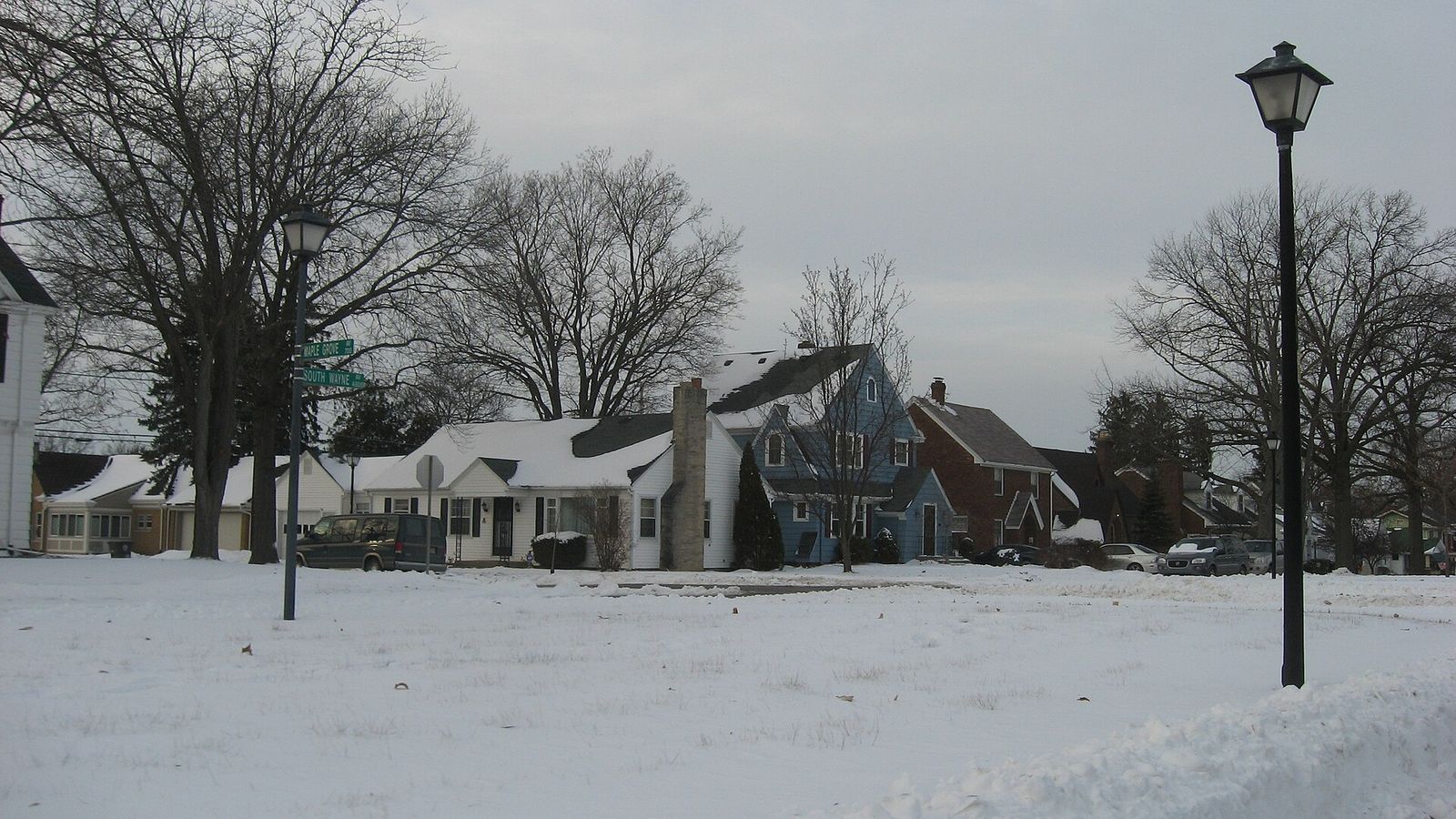

Southwood Park is the largest of Fort Wayne's planned early suburbs: 320 acres roughly bounded by West Pettit Avenue, Stratford Road, West Sherwood Terrace, Hartman Road, Lexington Avenue, Indiana Avenue, West Rudisill Boulevard, and Fairfield Avenue. It was developed by Hilgeman & Schaaf — Frank H. Hilgeman and Albert H. Schaaf, incorporated March 28, 1917 — working from George E. Kessler's 1912 park-and-boulevard plan for the city. Surveyor Adolf K. Hofer and city forester Carl J. Getz laid out the lots to keep the ground's mature trees. The plat joined older and newer pieces: Southwood Park Sections A through F, Fairmont Place, part of Fairfield Heights, Westover Place, Bechtel Place, and the Old Mill additions. Lot sales in Sections A and B began in July 1917, and Section C followed in early spring 1918.
The name is descriptive: Hilgeman & Schaaf marketed the subdivision as a "forest primeval," and its deed restrictions forbade removing a tree except as necessary to build a house. Southwood Park's developers also built its civic machinery.
The 1917 plat documents carried some of the first subdivision association maintenance fees collected in Fort Wayne — no more than five dollars a year — and in 1921 the firm introduced one of the city's first suburban community associations, the ancestor of today's Historic Southwood Park Neighborhood Association. The district's period of significance runs 1905 to 1965, and it holds 1,889 contributing buildings. The Southwood Park Historic District was listed on the National Register of Historic Places on December 22, 2009. The district's buildings are treated in the Architecture section.Sources: National Register nomination, Southwood Park Historic District (NRIS 09001126), read first-hand; Historic Southwood Park Neighborhood Association.