The exact page text, read by your browser's voice.
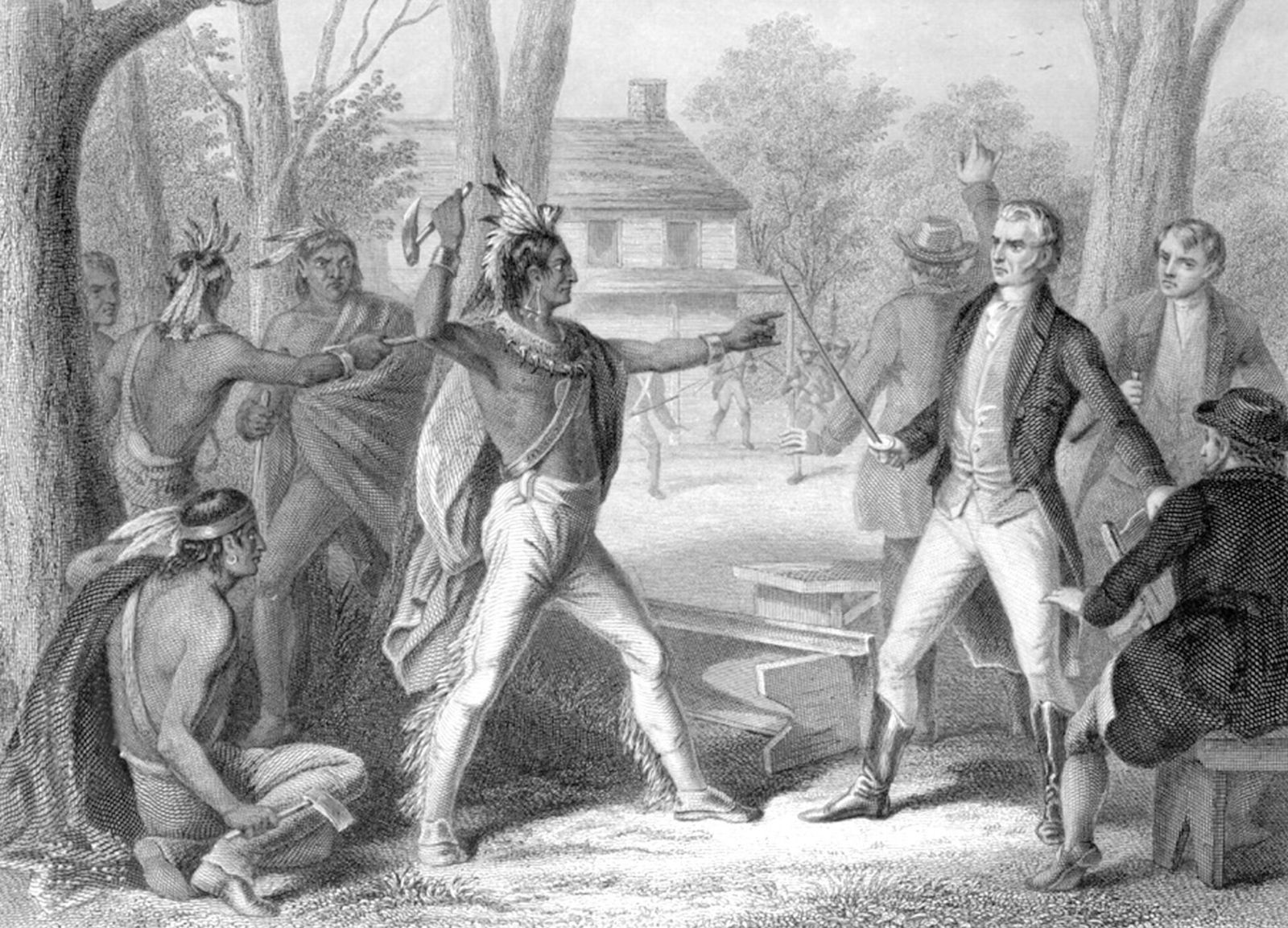

The commander who relieved Fort Wayne, 1812
On the record
He relieved Fort Wayne on 12 September 1812, ending the siege of 5–12 September, when some 500 Potawatomi and Miami under Winamac and Five Medals had besieged a garrison of about 100. The garrison’s own orderly book survives and is transcribed (Ball State, cited in § 02).
William Henry Harrison was born 9 February 1773 at Berkeley Plantation, Virginia, the son of Benjamin Harrison, a signer of the Declaration of Independence. He entered the army as an ensign in 1791, served as Wayne's aide, and distinguished himself at Fallen Timbers in August 1794. As governor of Indiana Territory (1801–1812) he negotiated the treaties that opened Indiana to settlement — the 1809 Treaty of Fort Wayne among them, which helped provoke Tecumseh's resistance — and fought the battle of Tippecanoe on 7 November 1811. In 1812 he was commissioned first in the Kentucky militia and then as a brigadier general of the United States Army and given command of the Army of the Northwest. His relief column ended the siege of Fort Wayne on 12 September 1812, and the victory at the Thames on 5 October 1813, where Tecumseh fell, closed the war in the Old Northwest. Harrison went on to the United States Senate from Ohio and to the presidency: inaugurated as the ninth president on 4 March 1841, he died in office on 4 April 1841, the first president to do so.
Find them on this page
- § 02 — the Story of Fort Wayne section
From the siege entry and orderly-book source in § 02; Appletons' Cyclopaedia of American Biography, Harrison entry; standard presidential biographies.