The exact page text, read by your browser's voice.
A nickname of the late 19th century — tested ever since
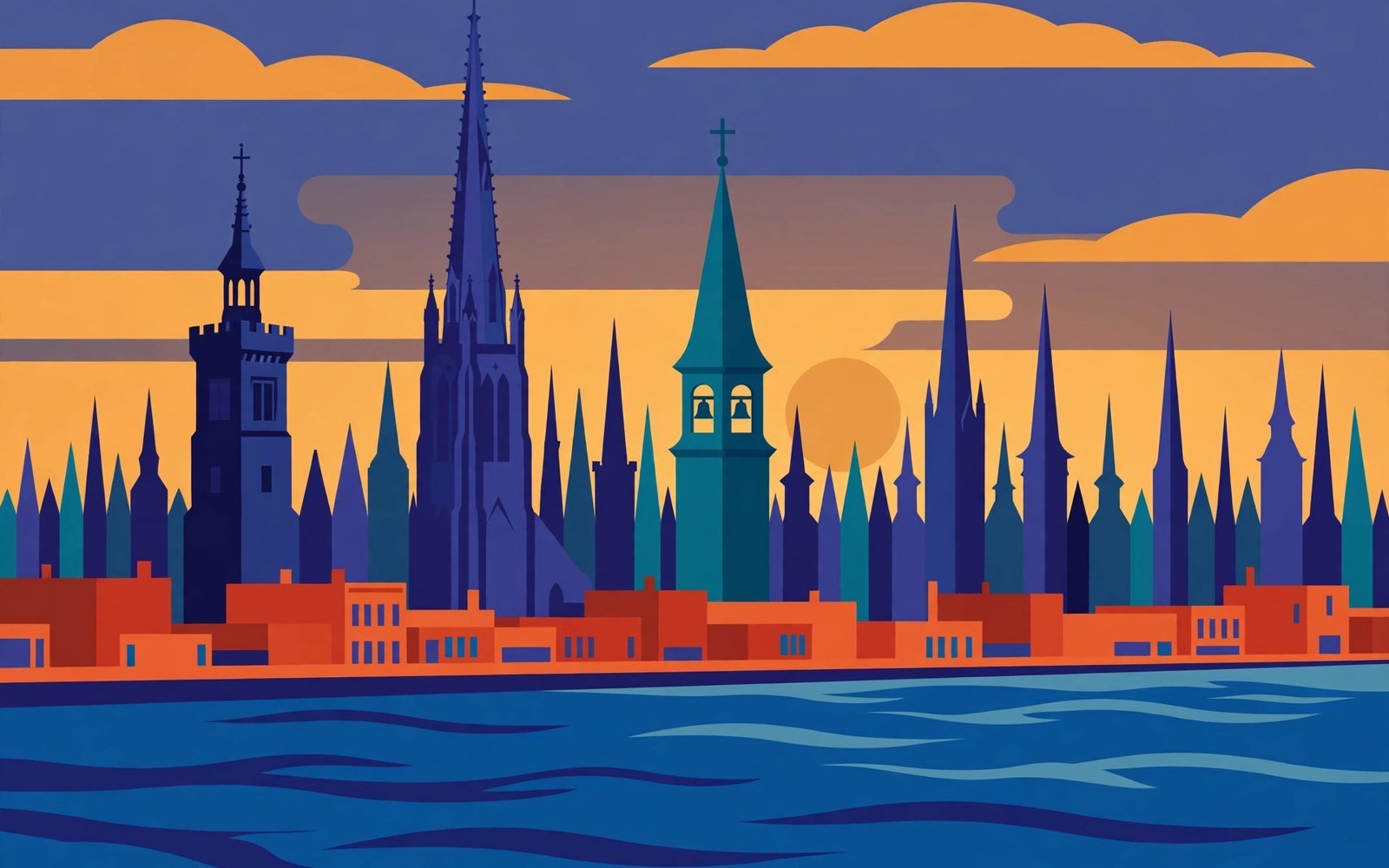
The name: Fort Wayne has called itself the City of Churches since the late nineteenth century, when it stood as the regional hub of three great traditions at once — the Catholic diocese seated here in 1857, the Lutherans whose seminary and district machinery grew here, and the Episcopalians of Trinity parish — and when its skyline, in the flat river city, was a picket fence of steeples. The nickname is unofficial; no founding ordinance or coining article for it has been produced, and this record prints the late-century origin as the standard account, not a documented coinage.
The count: The number attached to the name in modern retellings is 360. Its trail is thinner than its reputation: the figure circulated from a 2014 civic factoid account ("Today in 2014 there are more than 360 places of worship in the City of Churches," @FortWayneFacts, 15 August 2014) into the City of Fort Wayne's own 2018 fact sheet — "Known as the City of Churches, Fort Wayne is home to more than 360 churches of many different denominations and faiths" — and from there into Wikipedia and the press. No one has published an audited count: church counts depend entirely on what is counted — congregations, buildings, storefront ministries, county or city — and commercial church directories listing the city reach totals from the low two hundreds upward depending on their rules. In June 2007 the Journal Gazette put the moniker itself on trial ("'City of Churches' hard to prove," Rosa Salter Rodriguez, 22 June 2007), testing it against religious-census adherence data and finding the slogan unprovable as a ranking. What the data does support, and what this section documents congregation by congregation, is density and range: the adherence figures commonly published for the city run to about 54 percent of residents claiming a religious affiliation — roughly 16 percent Catholic, 9 percent Lutheran, 6.5 percent Baptist, 5 percent Methodist, with a small, very old Jewish community (0.14 percent) and the Muslim, Orthodox, Hindu, Buddhist and Sikh congregations of the entries above.
Sources:
- "Fort Wayne, Indiana," Wikipedia, religion section — the late-19th-century origin of the moniker as the hub of the Catholic, Lutheran and Episcopal faiths; the affiliation shares.
- City of Fort Wayne, fact sheet (2018), quoted in Input Fort Wayne, "More than a 'City of Churches'" (21 March 2018) — the "more than 360 churches" claim in the city's own telling.
- ACGSI, Fort Wayne facts page, quoting @FortWayneFacts (15 August 2014) — the earliest dated carrier of the 360 figure found.
- Rosa Salter Rodriguez, "'City of Churches' hard to prove," Journal Gazette, 22 June 2007 — the moniker tested against census and adherence data.