The exact page text, read by your browser's voice.
1958–2015 and after
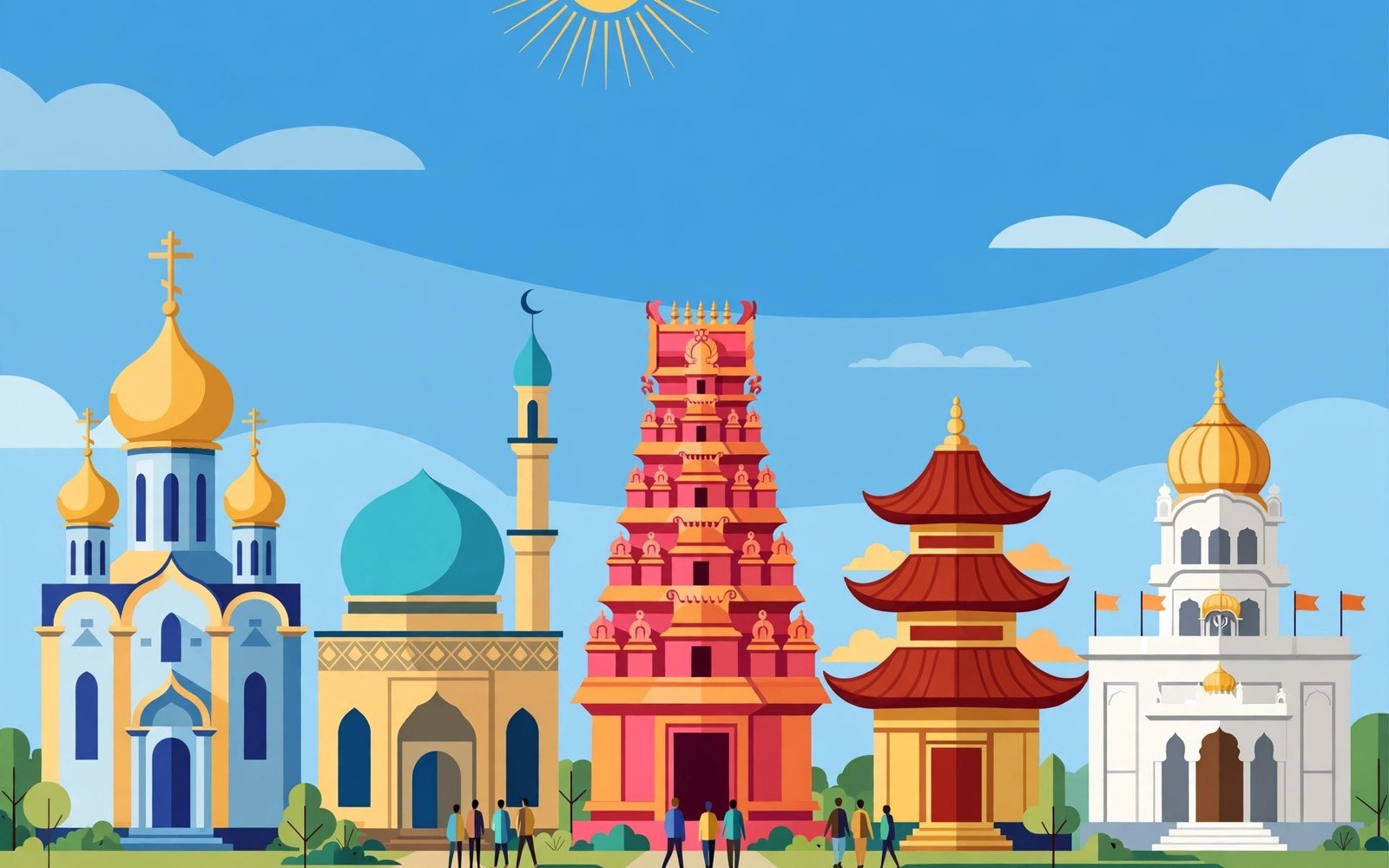
The Orthodox: Greek immigrants reached Fort Wayne in the early twentieth century, and the parish of Holy Trinity Greek Orthodox dates its community to 1959 — the history the parish tells at its Greek Festival, which reached its forty-sixth year in 2026 at Headwaters Park. The parish crowned a long building campaign when Archbishop Elpidophoros of the Greek Orthodox Archdiocese consecrated its church at 110 East Wallen Road on 24–25 October 2025, telling the congregation that Fort Wayne's Greeks had "left your beloved Greece yet kept your faith, your language, your ethos." A second Holy Trinity — the Russian Orthodox Church Outside of Russia parish — dates to about 1958; its founding member Helen Lazanowski was still greeting visiting bishops at the parish's fiftieth year in 2008. A third Orthodox parish, St. Nicholas (Orthodox Church in America), worships at 3535 Crescent Avenue.
The Burmese mosque: The largest single religious building campaign of the refugee era belongs to the Burmese Muslims. Their Burmese Muslim Education and Community Center — registered in September 2010, its Seddlemeyer Avenue property bought in 2011 — built Masjid Noor-ul-Islam in phases: Phase I completed in time for a grand opening on 24 May 2015 attended by more than two thousand Muslims from across the United States, at a projected total cost of about 1.1 million dollars, all of it raised from the community and its American well-wishers; the hall was finished in November 2016 and the Noor ul-Islam Academy opened in July 2017. The Associated Press reported the opening as the first mosque built in the United States by Burmese Muslims; community leaders put it more strongly — the first mosque Burmese Muslims had built anywhere in the world in some forty years. Of Fort Wayne's roughly 7,000–8,000 Burmese residents at the time, about 2,000 were Muslim. The community's next project, a fifteen-acre Muslim Cemetery of Fort Wayne, won county approval in 2021. The Burmese people's story is in the Communities record.
Hindu, Buddhist, Sikh: Hindu worship in the city is centred on the Omkaar Temple at 14745 Yellow River Road, in the city's northwest (profiled by Input Fort Wayne in 2018; the temple's founding date could not be verified from published sources — a). The Indiana Buddhist Temple, a Theravada congregation led by Bhante Devananda, stands at Hoagland in southern Allen County, outside the city limits but serving it; the Sikh Gurdwara of Fort Wayne likewise stands at Roanoke, southwest of the city. Both are carried here as county institutions serving a Fort Wayne community, and flagged as such rather than absorbed silently into the city's count.
Sources:
- Greek Orthodox Archdiocese of America (goarch.org), remarks of Archbishop Elpidophoros at the consecration, 25 October 2025 — the Wallen Road church, the Greek immigration, Fr. Cosmin Sicoe.
- Holy Trinity Greek Orthodox Church, Greek Festival history (holytrinityfortwayne.org; Whatzup, June 2026) — the community's 1959 date and the 46th festival.
- Diocese of Chicago and Mid-America (ROCOR), 2008 pastoral visit report — the second Holy Trinity's half-century and its founding member.
- Associated Press, "Burmese Muslims celebrate opening of first US mosque" (24 May 2015) and BMECC project records — the Seddlemeyer Avenue mosque, the phases, the 2015 opening, the cemetery project.
- Input Fort Wayne, "More than a 'City of Churches'" (2018) — the Omkaar Temple and St. Nicholas; Indiana Buddhist Temple and Sikh Gurdwara congregational records for the county institutions.