The exact page text, read by your browser's voice.
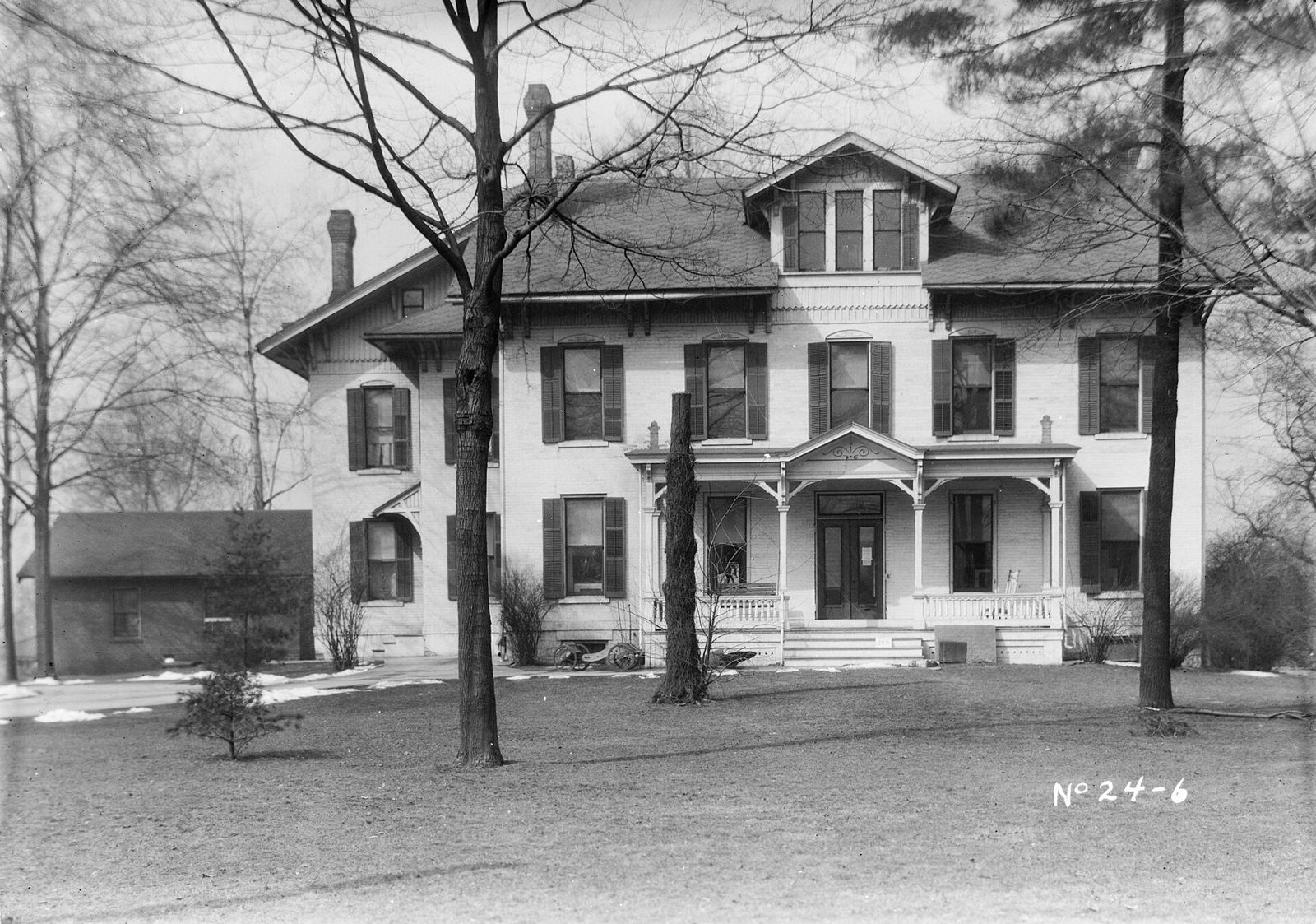

The fortune: Swinney's wealth was land, worked patiently. He bought farmland west of the young city, farmed it, raised livestock, and built in town — the Swinney Block downtown was his. His marriage to Lucy Taber brought a dowry of 240 acres, and the Swinney holdings grew around the homestead he built in 1844–45. The National Register nomination for the homestead describes the fortune's sources plainly: land speculation, farming, and livestock. (One caution on his dates: the parks and preservation records give his death as 1875, which fits the bequest chronology below, but stray published sources give 1885 and even 1895; 1875 is the date the city's own records use.)
Its scale: The estate's size is best measured by the gift itself: at his death Swinney bequeathed his house and roughly 240 acres to the City of Fort Wayne as a public park, "to remain open and free to the public" — the first land donated for park purposes in Fort Wayne, by the preservation record.
What it left: Swinney Park. The bequest carried life estates for his children, so the city waited: the daughters gave early possession of part in 1893, and full possession came only in 1922, on the last daughter's death. The homestead stands in the park, National Register–listed, and the park's Japanese Gardens (later the Jaenicke Gardens) grew from the same acres.
Sources:
- National Register of Historic Places nomination, Swinney Homestead — the fortune's sources, the life estates, the 1922 possession.
- ARCH / Historic Landmarks Foundation marker record — the bequest "to remain open and free to the public"; first land donated for park purposes in Fort Wayne.
- City of Fort Wayne Parks and Recreation history — death and bequest, 1875.