The exact page text, read by your browser's voice.

Wealth: Fortunes Made, Kept, and Given Away
Fort Wayne's money has a shape, and it changes by era. The first fortunes were furs, treaty annuities, and land at the meeting of three rivers. The canal and the railroads turned land and banking paper into the second layer. Iron, wagon wheels, hosiery, beer, and meatpacking built the third. Insurance and banking built the fourth, quieter and larger than the rest, and a striking share of it came back to the city as foundations — by the early twenty-first century Fort Wayne's biggest pools of private wealth were not family bank accounts at all, but the Foellinger Foundation, the English-Bonter-Mitchell Foundation, and the Community Foundation, all spending old Fort Wayne fortunes on the city that made them. The newest fortunes — steel, music retail, handbags — are company fortunes again, and their giving is only beginning.
Every figure in this section is a figure somebody published: an estate valuation in a history or a newspaper, a capitalization in a city directory, a sale price in a company history, a foundation's own federal tax filing. Where no figure was ever published, this section says so rather than guessing. For people still living, it records only what is already public — company roles, published gifts, and the public filings of their foundations — and no estimate of any living person's net worth appears here, because no reputable publication has published one for them.
Part One: The Trading and Land Fortunes
Jean Baptiste Richardville and the Treaty-Era Fortune
The fortune: Richardville, principal chief of the Miami (his full profile is in the People section), stood at the center of the trade at the Forks of the Wabash and at the center of every treaty negotiation between the Miami and…
The Ewings: William G. and George W. Ewing
The fortune: The Ewing brothers' firm, W. G. & G. W. Ewing Co. (its business entry is in the Business section), built the largest independent fur-trading house in the West and fought John Jacob Astor's American Fur Company for…
Allen Hamilton: Banking at the Head of the Maumee
The fortune: Hamilton, an Irish immigrant who rose from clerk to merchant to banker, became president of the Fort Wayne branch of the State Bank of Indiana in 1835, when the branch bank was the financial center of a town still…
Hugh McCulloch: From the Fort Wayne Branch Bank to the Treasury
The fortune: McCulloch arrived in Fort Wayne in 1833 and rose as cashier and manager of the Fort Wayne branch of the State Bank of Indiana from 1835; he was Allen Hamilton's partner in Allen Hamilton & Co. from 1853, then…
Thomas W. Swinney: The Land West of Town
The fortune: Swinney's wealth was land, worked patiently. He bought farmland west of the young city, farmed it, raised livestock, and built in town — the Swinney Block downtown was his. His marriage to Lucy Taber brought a dowry…
Part Two: The Industrial Fortunes
John H. Bass: Iron, Car Wheels, and Brookside
The fortune: Bass began with $3,700 of capital in a small machine shop, and he multiplied it first in land: an Iowa land speculation from 1853 to 1857 returned $15,000 in cash and land worth more than $50,000 (the News-Sentinel's…
The Olds Family: Wagon Wheels for a Continent
The fortune: Noble G. Olds, a carpenter and machinist, established the family's lumber yard, machine works, and wagon-wheel trade in Fort Wayne. His son Henry G. Olds (1839–1902) founded the Olds Wagon Works in 1881 — the works…
Kerr Murray: A Fortune Recorded Only in Capital
The fortune: The Kerr Murray Manufacturing Company grew out of the Fort Wayne gas works: James H. Walker, a Scottish gas engineer who had built gas plants from Quebec to Hartford, took charge of the Fort Wayne works and resigned…
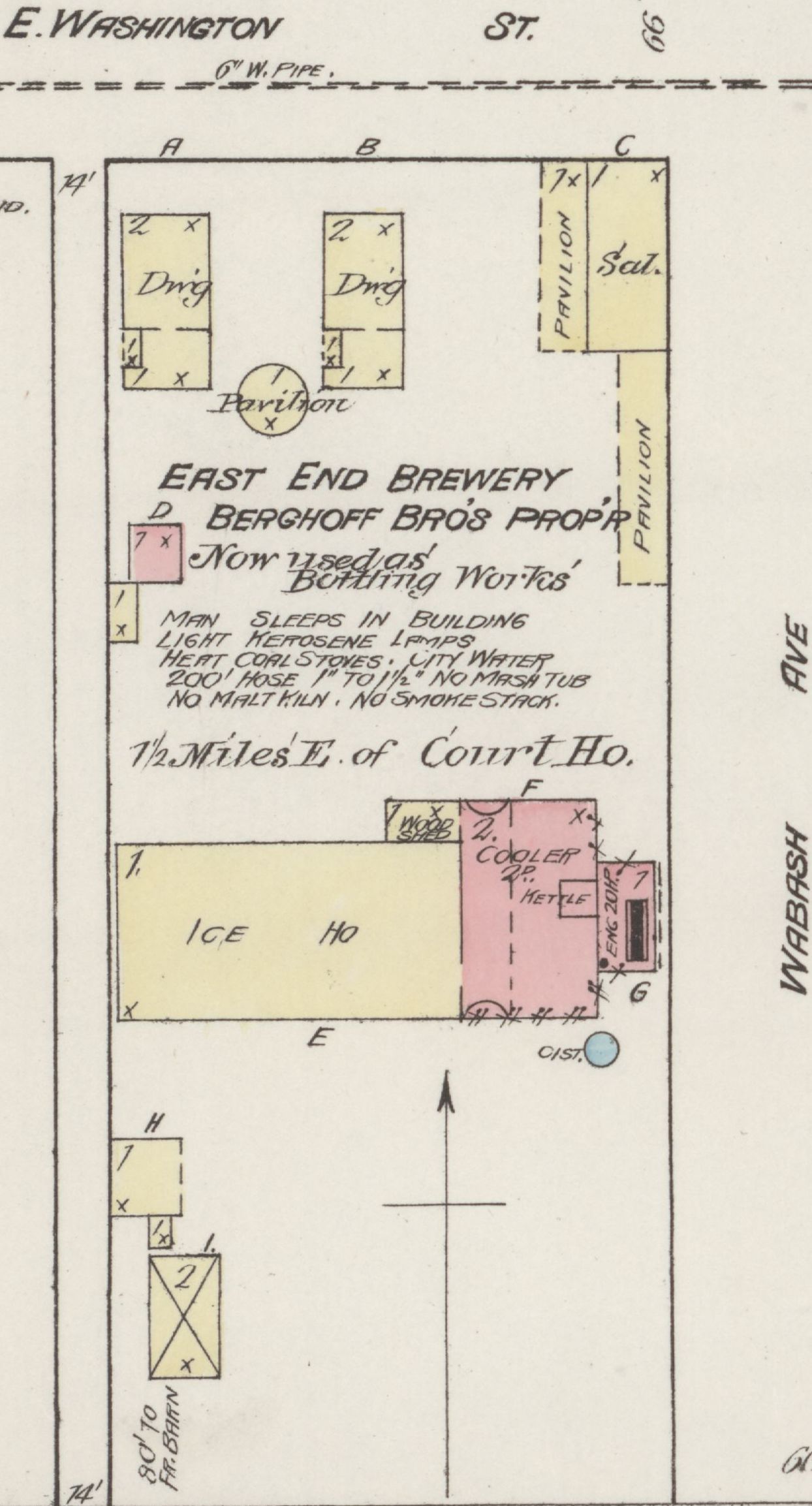
The Berghoff Brothers: Dortmunder Money
The fortune: The Berghoff brothers came from Dortmund, Germany — Herman (born 1852) first, then Henry C. (1856–1925), Hubert, and Gustav. After years in bottling and wholesale trade, the brothers capitalized a brewery in April…
Theodore F. Thieme: Hosiery Money, Given to Art
The fortune: Thieme (1857–1949) co-organized the Wayne Knitting Mills in August 1891, and the mills' hosiery made the fortune; he ran the mills with profit-sharing for the workers, unusual for the era, and the family firm later…
Peter Eckrich and the Meatpacking Fortune
The fortune: Peter Eckrich (1864–1942) arrived from Waldsee, Germany at seventeen and opened a Fort Wayne meat market in 1894, selling the sausages of his childhood. He went wholesale in 1907 and incorporated as Peter Eckrich &…
The Mossmans: Hardware Money Behind the Magnet Wire Industry
The fortune: W. E. Mossman and his son B. Paul Mossman (born 1870 at Coesse, brought to Fort Wayne in 1879) built the Mossman-Yarnelle Company, wholesalers of heavy hardware — incorporated in March 1908 and reorganized in October…
The Magnet Wire Money: George Jacobs and the Rea Family
The fortunes: George A. Jacobs, a chemist who had worked at General Electric's Fort Wayne plant, formed the Dudlo wire company in 1911 with William and B. Paul Mossman behind him and built the Dudlo Manufacturing Company from its…
Dale W. McMillen: Feed, Soya, and "Mr. Mac"
The fortune: Dale W. McMillen (1880–1971) bought a Fort Wayne grain elevator in 1916 for $2,000 in cash and an $8,000 mortgage — his obituary in the Decatur Daily Democrat preserves the figures — and built from it the Wayne Feeds…
Fred Zollner: Pistons, Pistons, and the Pistons
The fortune: In 1931 Fred Zollner moved his father's small Duluth piston plant to Fort Wayne — accounts differ on the starting crew, eight men in one and twelve employees in another — and the Zollner Corporation (its business…
Part Three: The Philanthropy Dynasties
The Foellingers: A Newspaper Fortune, Given Back on Schedule
The fortune: Oscar G. Foellinger bought The News-Sentinel in 1922 (the Foellinger Foundation's own 2022 annual report). When Oscar died in 1936, his daughter Helene R. Foellinger (1910–1987) became publisher at twenty-five and…
Frank M. Freimann: The Magnavox Fortune
The fortune: Frank M. Freimann (1905–1968) was born in Austria-Hungary and came to the United States at nine. He rose through the Magnavox Company, came to Fort Wayne with the company's headquarters move as an executive…
The English Fortune: Lincoln Life Stock and the English-Bonter-Mitchell Foundation
The fortune: Dr. Calvin English (1858–1948) was one of the thirty-one Fort Wayne businessmen who founded the Lincoln Life Insurance Company in 1905, and its first medical director. Fort Wayne historian Randy Harter's account…
The McMillen Foundations
The feed-and-soya fortune of Dale McMillen (Part Two) was given a permanent form by the next generation: the Harold and Rachel McMillen Foundation was created in 1961 for Allen County purposes, and the McMillen Foundation — the vehicle that donated and helped construct McMillen Park and endows the family's other Fort Wayne institutions — continues the name. The family's giving runs through named places rather than annual publicity: McMillen Park, the McMillen Health Center, the Indiana Tech endowments, and the Wildcat Baseball League's six decades of free seasons are the published record.
Sources:
- Wells Fargo foundation directory — the Harold and Rachel McMillen Foundation, created 1961, Allen County purposes.
- Wildcat Baseball League history; City of Fort Wayne Parks and Recreation — the McMillen Foundation's gifts.
The Community Foundation: Where the Smaller Fortunes Pooled
What it is: The Community Foundation of Greater Fort Wayne is not one fortune but the pooled afterlife of hundreds of them, and its history — told in its own centennial account, "A Century of Giving" — is the best single map of…
Parkview: The Fortune That Isn't One
Parkview belongs in this section as the exception that defines the rule. Fort Wayne's largest health system is wealthy — more than $2 billion in annual revenue since 2019, and the region's largest employer with more than 16,000…
Two Legacies in Brick and Glass: The Foellinger Theatre and the Conservatory
The theatre: The Foellinger Theatre in Franke Park was built in 1949 as Helene Foellinger's gift to the city in memory of her father Oscar, the News-Sentinel publisher. It seats 2,751. Fire damaged it in the 1970s and it was…
Part Four: The Modern Fortunes
Chuck Surack and Sweetwater
The fortune: Chuck Surack founded Sweetwater in Fort Wayne in 1979, building it from a recording-studio business into the largest online retailer of musical instruments and pro audio in the United States. Sweetwater's revenue…
Keith Busse and the Steel Dynamics Founders
The fortune: Keith E. Busse was born and raised in Fort Wayne, educated at International Business College, St. Francis College, and Indiana University's Fort Wayne campus, and spent twenty-one years at Nucor Corporation, rising…
Barbara Bradley Baekgaard and Patricia R. Miller: The Vera Bradley Fortune
The fortune: Friends Barbara Bradley Baekgaard and Patricia R. Miller founded Vera Bradley in Fort Wayne in 1982, building a handbag and luggage company on quilted cotton patterns into a national lifestyle brand; the company went…
Do it Best: The Fortune That Belongs to Its Members
A correction first: Do it Best is sometimes assumed to be a family company. It is not, and never was. It is a member-owned cooperative, and its scale — more than $6 billion in annual sales, and in 2022 the largest privately held…
Part Five: The Great Houses
The Houses the Fortunes Built
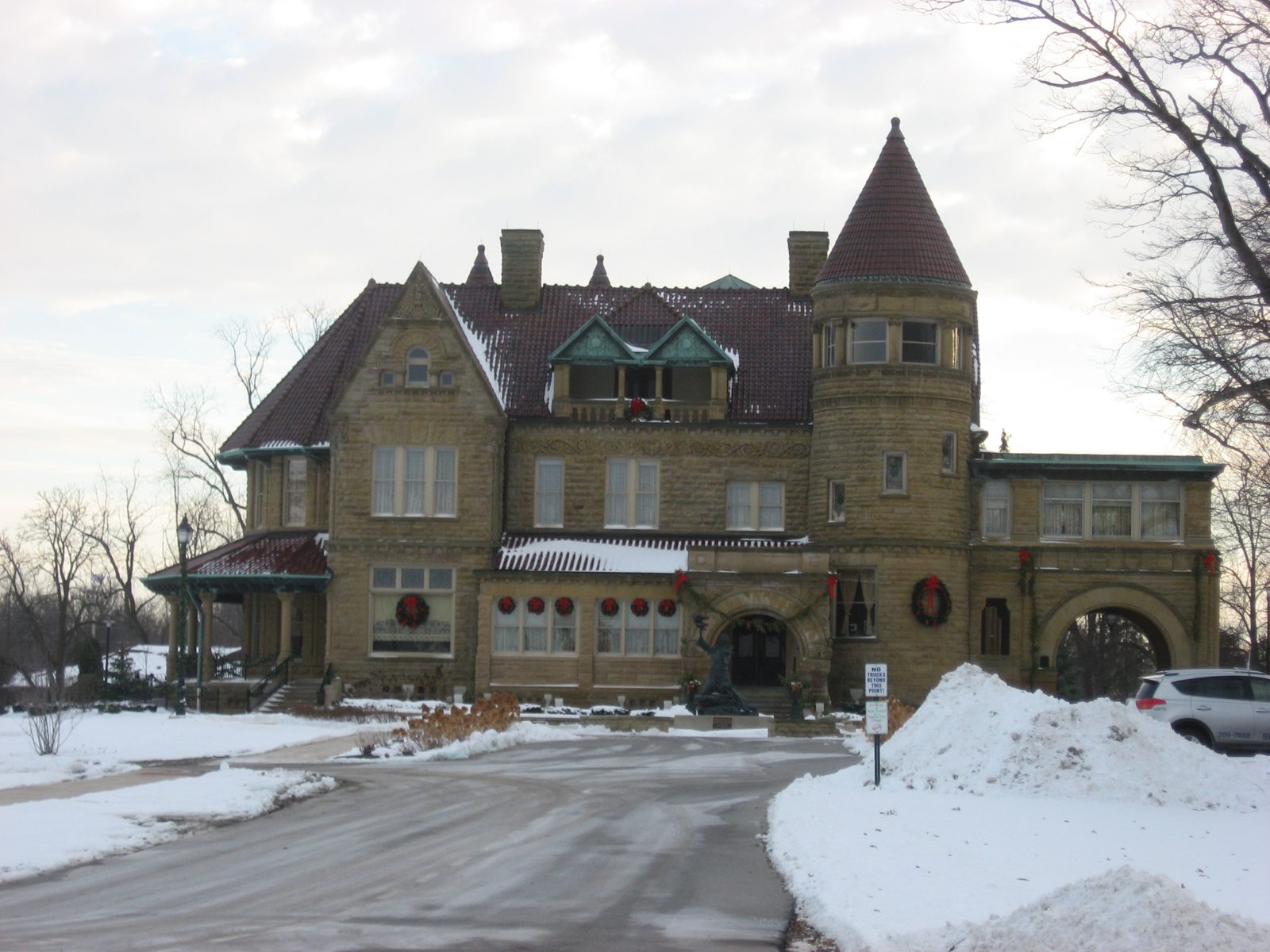
Fort Wayne's wealth is most visible where it was spent on houses, and several of the greatest survive as public or semi-public places. They are gathered here as a group; the fortunes behind them are in the entries above.
The record this section cannot complete is stated in its own note file: several of the city's industrial families left no published estate figures at all, and for the living, this section prints only what they and the public record have already printed. What Fort Wayne's money did is nonetheless legible — in Lindenwood's subscriptions and Swinney's acres, in an art museum that began in a hosiery maker's front rooms, in a theatre and a conservatory downtown, and in foundation filings, renewed every year, that turn the News-Sentinel's old profits and a Lincoln Life doctor's stock into grants. The fortunes were made here. A remarkable share of them is still here.