The exact page text, read by your browser's voice.
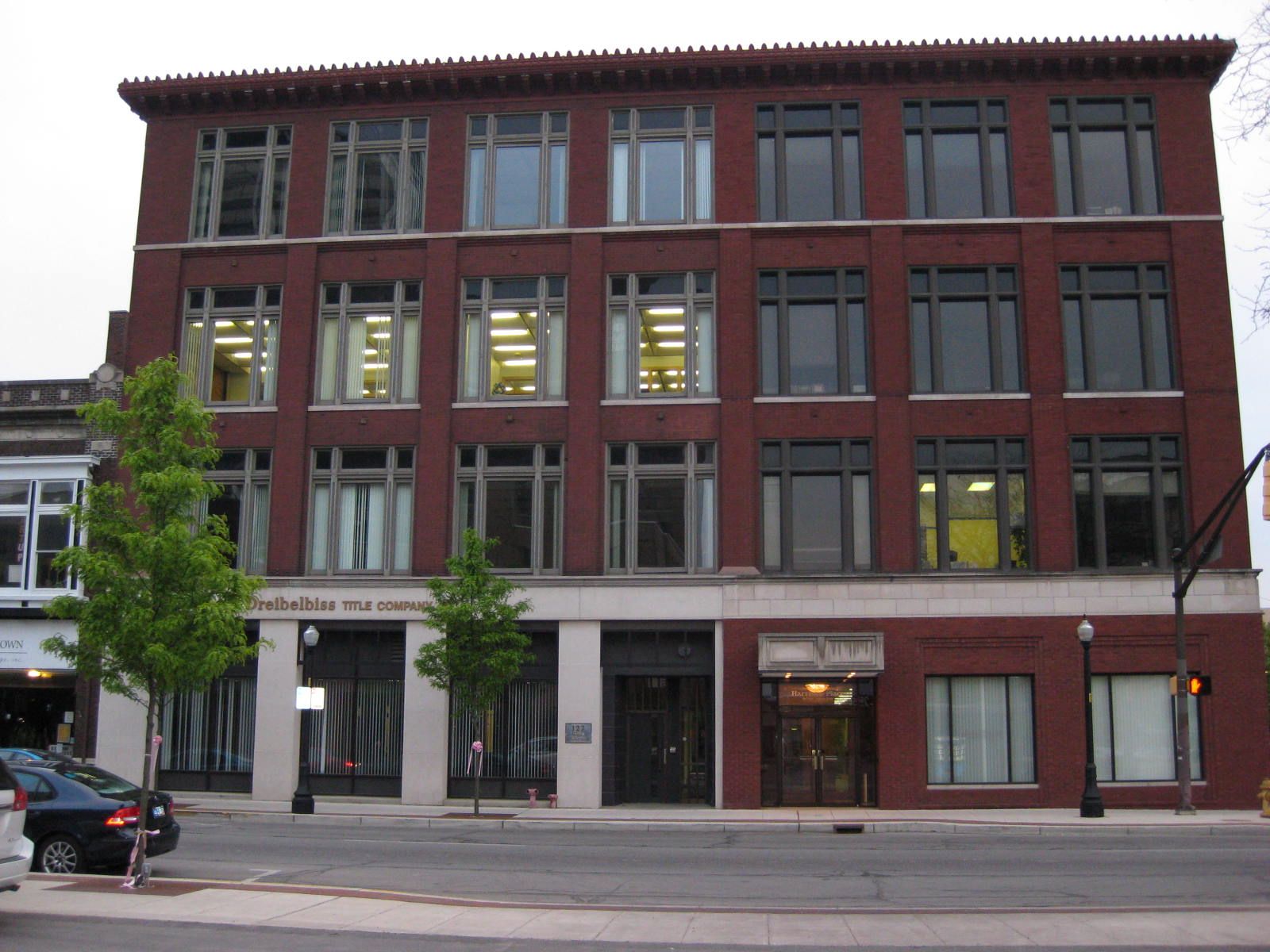

West Columbia Street was Fort Wayne's first business district: the trace west from the fort became the landing place for Wabash and Erie Canal passengers and cargo, where the Orbison Basin let canal boats dock and turn. The street carries an unmatched run of Fort Wayne firsts — first post office (1820), hotel (1823), newspaper (1833), theater (1851) and railway station (1853). When urban renewal threatened the surviving blocks, local advocates and Mayor Harold Zeis forced a different outcome: in 1965 the street was protected and christened "The Landing," dedicated on October 23, 1965 — Indiana's first local historic district.
The National Register listing followed on September 16, 1993: 18 contributing buildings and one contributing structure, wholesale and commercial houses of about 1868 to 1943 in Italianate, Romanesque Revival and Renaissance Revival dress — the Keystone Block (c. 1865), the Bash Building (1895), the Fisher Brothers Paper Building (1914), the Pinex Company Building (1917), and the separately listed Randall Building. Just northeast, severed from the district by the railroad elevation, the John Brown Stone Warehouse of 1852 — listed separately in 1997 — is the oldest commercial building in Fort Wayne and one of the few to have served the canal trade itself. A multi-phase revitalization begun in 2018 has rehabilitated seven Columbia Street buildings and added apartments and commercial space, with the Landing Exchange phase, on a lot vacant since a 1975 fire, announced in 2026.
Sources: Wikipedia, "The Landing Historic District" (National Register reference no. 93000953; a Fort Wayne magazine account gives the Register year as 1994 — see the note file); National Register nomination, John Brown Stone Warehouse (1997); Sturges Property Group, "Then vs. Now: Historical Listings, Pt. 4" (2025); City of Fort Wayne, Landing Exchange announcement (April 2026).