The exact page text, read by your browser's voice.
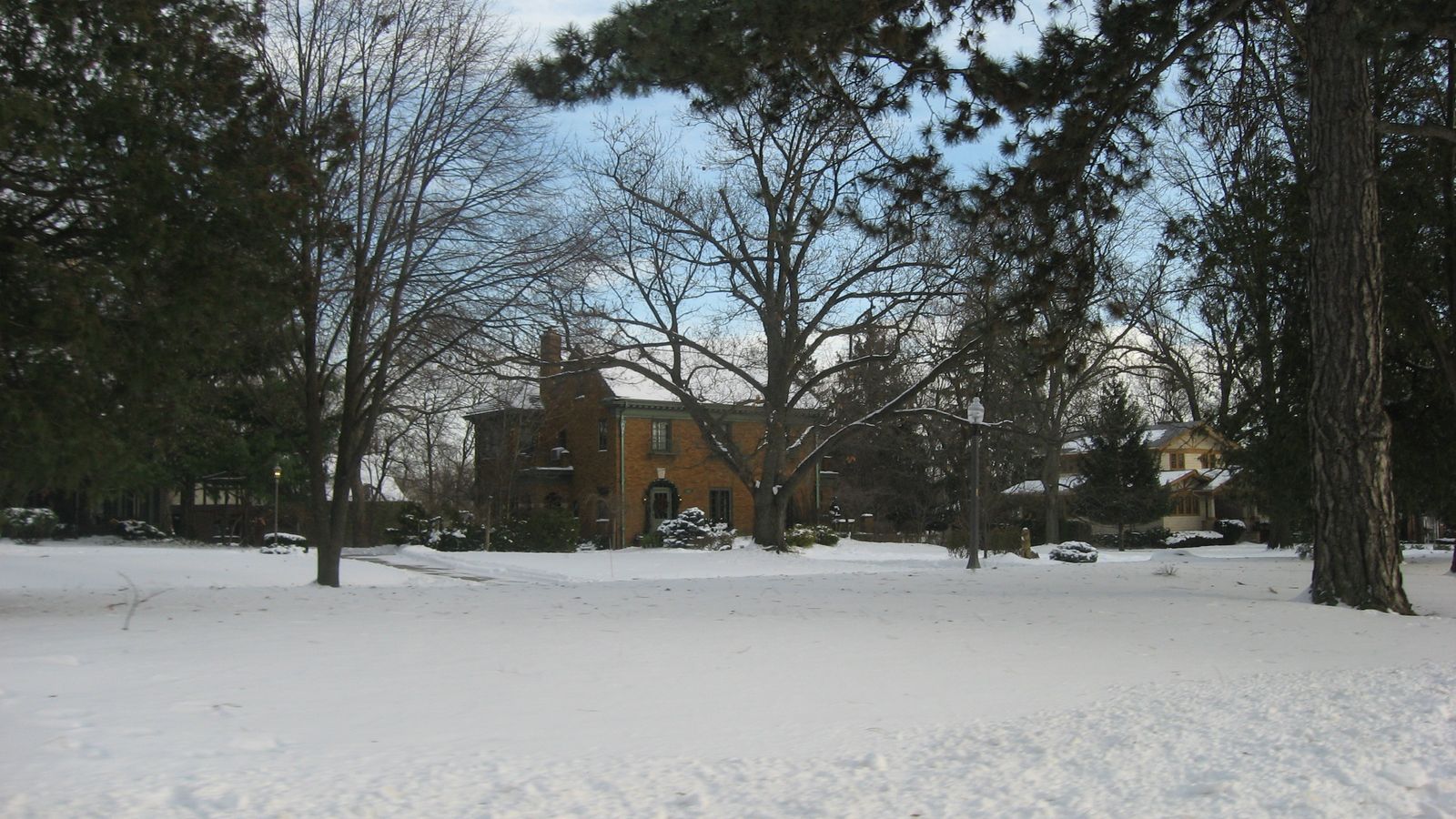

Two plans made Fort Wayne's boulevard neighborhoods. Charles Mulford Robinson's 1909 city-beautification report came first; then, in 1912, the city adopted George E. Kessler's plan for a system of parks and boulevards — the work the National Register's multiple-property documentation calls "The Civilizing of a Midwestern City." The Fort Wayne Park and Boulevard System Historic District, listed on December 28, 2010, carries the system itself onto the Register, and a family of neighborhoods along the boulevards followed it there.
Forest Park Boulevard is the grandest of them: a wide boulevard with traffic divided by a broad, tree-planted median, about a mile and a half northeast of downtown, its spacious lots developed from about 1890 to 1955 with Prairie School, Italian Renaissance, Tudor Revival and American Foursquare houses. The district — 93 contributing buildings, one contributing site and 15 contributing objects — was listed on March 30, 2007, under the Park and Boulevard multiple-property submission. Shawnee Place, Northwood, North Anthony Boulevard, Harrison Hill and the other boulevard districts are its siblings; the architects who filled them are profiled in the Artists section, and Wildwood Builders' own garden suburbs belong to that record as well.
Sources: Wikipedia, "Forest Park Boulevard Historic District" (National Register reference no. 07000212); National Register nomination, Forest Park Boulevard Historic District (2007); National Register nomination, Northwood Historic District (2026 filing), for the multiple-property framework and the 1912 Kessler plan; National Register listings in Allen County, for the Park and Boulevard System listing date.