The exact page text, read by your browser's voice.

1848–1914, and the system that outlasted the language
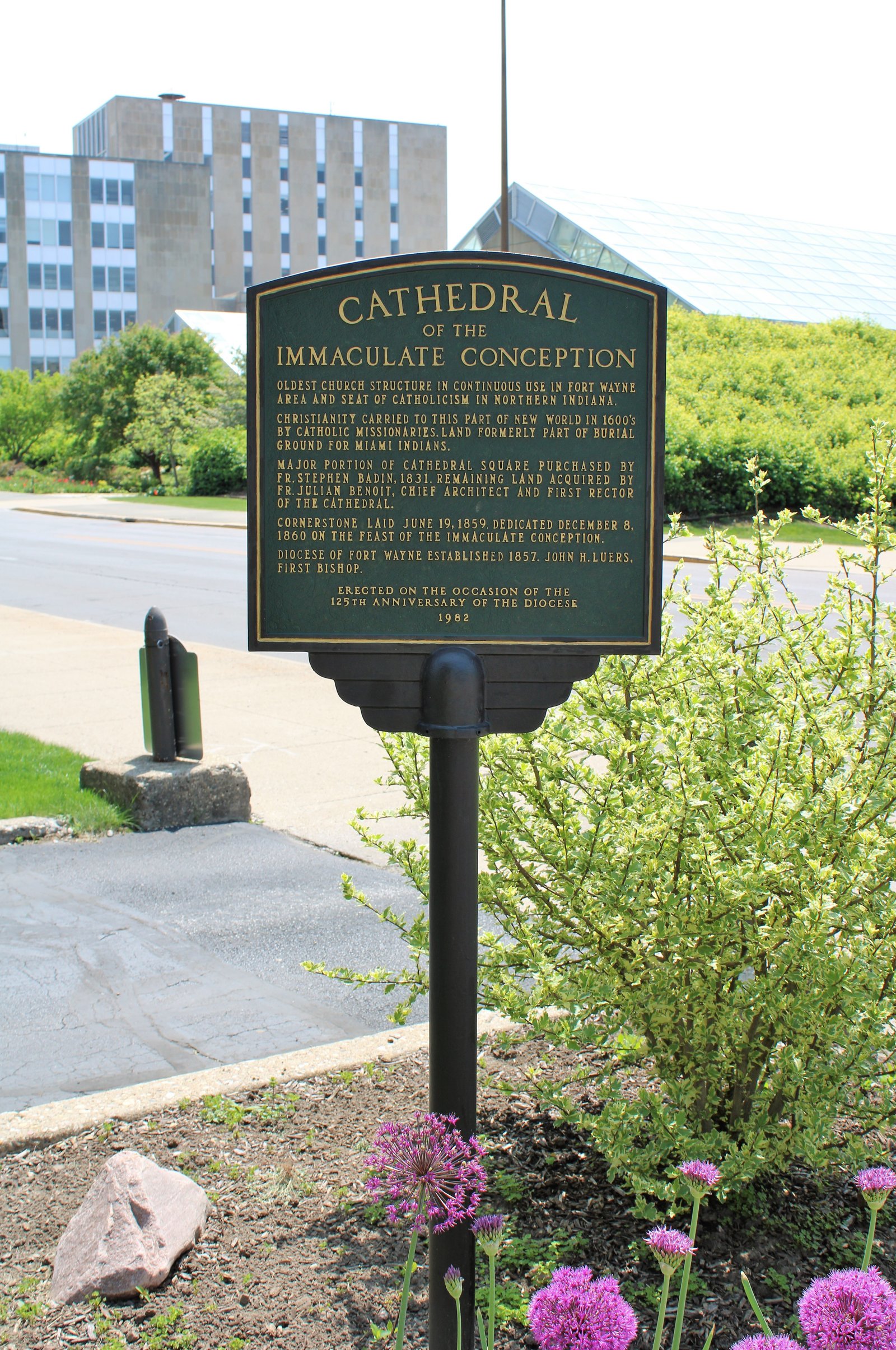
The pattern: From the 1840s to the First World War, Fort Wayne's religious growth ran on a German engine, on both sides of the Reformation. The Lutheran mother church, St. Paul's (1837), sent its pastors and its people outward: Wyneken's circuit had already planted preaching places across northeastern Indiana — Friedheim and Zion near Decatur, Soest, Bingen — and the county filled with daughter congregations worshipping in German, a language regime that lasted in many pulpits into the twentieth century and split congregations, as at Trinity English in 1846, when it broke. On the Catholic side, St. Augustine's (1836) played the mother-parish role: St. Mary Mother of God was cut from it in 1848 for German speakers, and the diocese built out a city of territorial and national parishes, each with its school — the parish-school system is treated in the Schools section. By the turn of the century a walker downtown passed the cathedral (1860), Trinity Episcopal (1866), St. Paul's Lutheran, the Wayne Street Methodist brick church (1871) and a dozen more within a few blocks: the churchscape behind the "City of Churches" nickname in the closing entries below.
The seats: The systems also made Fort Wayne a place where denominations keep their offices. The city is the seat of the Roman Catholic Diocese of Fort Wayne–South Bend (1857, above) and of the Lutheran Church–Missouri Synod's Indiana District, whose territory covers Indiana and north-central Kentucky — a district organized in the early 1960s as the Fort Wayne congregations outgrew the old Central District. The national headquarters seated here are treated in their own entry below. The denominational record of these years is kept at the Allen County Public Library, whose congregational-records directory indexes the published histories — among them George R. Mather's Frontier Faith: The Story of the Pioneer Congregations of Fort Wayne, Indiana, 1820–1860 and Sarah Vosmeier's Fort Wayne's Churches and Congregations, 1700–1950.
Sources:
- Rudolph F. Rehmer, "The Origins of Lutheranism in the Fort Wayne Area (1829–1847)" (1967) — the county mission field and the German-language congregations.
- "Fort Wayne, Indiana," Wikipedia, religion section — Fort Wayne as seat of the LCMS Indiana District (Indiana and north-central Kentucky).
- Allen County Public Library, "Allen County Congregational Records" directory (acpl.lib.in.us) — the congregational histories held, incl. Mather's Frontier Faith and Vosmeier's Fort Wayne's Churches and Congregations, 1700–1950.