The exact page text, read by your browser's voice.
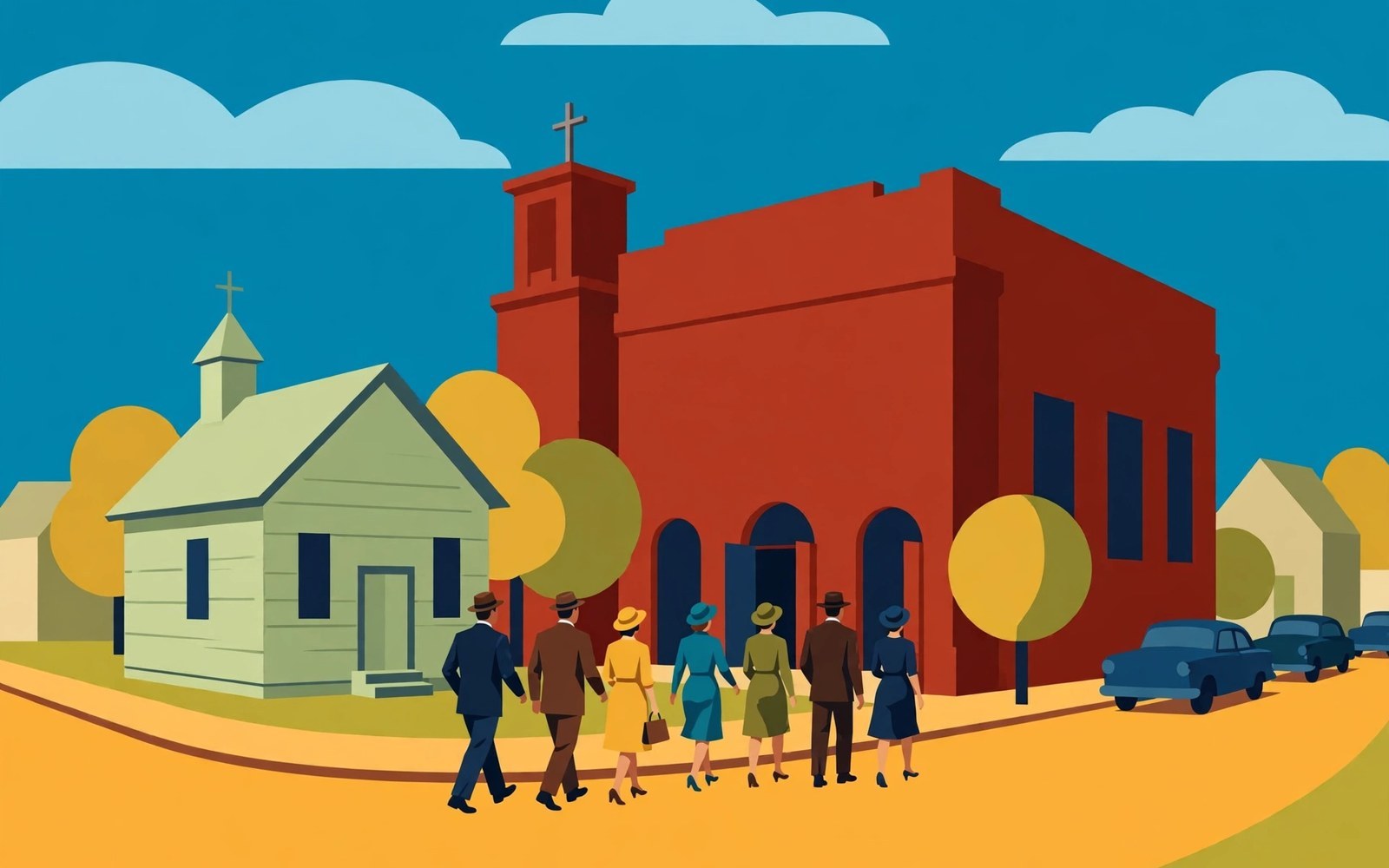
First Zion A.M.E. Zion 1918 — Pilgrim Baptist 1919
The foundings: Turner Chapel stood alone for seventy years. The Great Migration era doubled the city's Black congregation count in two years. First Zion A.M.E. Zion Church was organized in 1918 with eleven members — the A.M.E. Zion connection, the denomination of Frederick Douglass and Harriet Tubman, distinct from Turner Chapel's A.M.E. Church. Pilgrim Baptist Church, the city's anchor Black Baptist congregation, was organized in 1919 at 1331 Gay Street, on the southeast side; its present church was built in 1950. The three congregations — A.M.E., A.M.E. Zion and Baptist — formed the institutional core of Black Fort Wayne through the twentieth century: the pulpits that hosted the civil-rights meetings, the choirs and the funeral and wedding life of the community, documented congregation by congregation in Miller's African Americans in Fort Wayne and in the History Center's record. Pilgrim's pastors appear as biographies in the People record; the school-desegregation fight these churches backed is in the Schools section.
Sources:
- ACGSI, "Wayne Township Churches of Allen County, Indiana" — First Zion A.M.E. Zion organized 1918 with eleven members; Pilgrim Baptist organized 1919 at 1331 Gay Street, present church built 1950.
- Dodie Marie Miller, African Americans in Fort Wayne: The First 200 Years (Arcadia, 2000) — the congregations' twentieth-century roles.