The exact page text, read by your browser's voice.
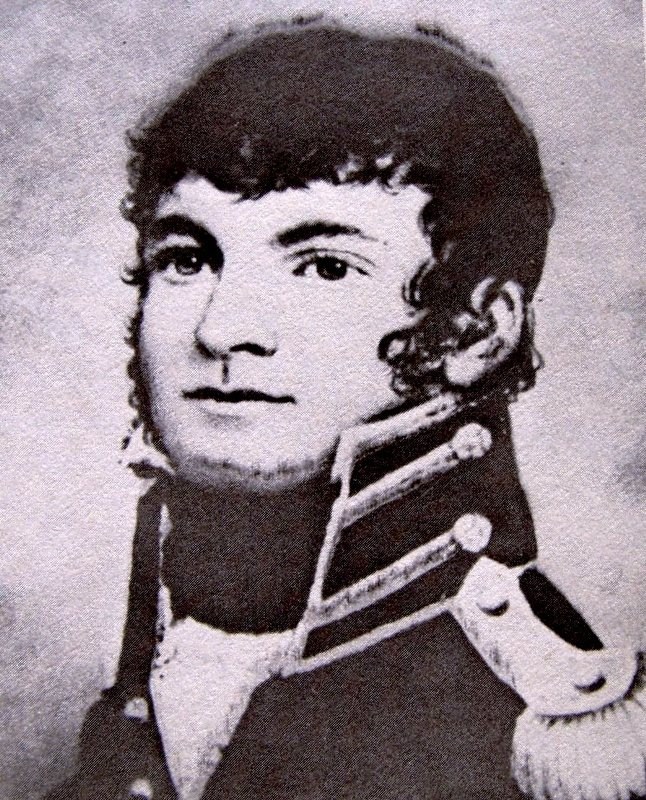

Apekonit · Interpreter and U.S. Indian agent at Fort Wayne
On the record
Captured as a boy and raised Miami, he married Little Turtle’s daughter, interpreted at Greenville, and served as U.S. Indian agent at Fort Wayne.
Little Turtle died under his roof in July 1812; a month later Wells was killed at Fort Dearborn. No figure better embodies the confluence: claimed, fully, by both worlds.
William Wells was born about 1770 at Jacob's Creek, Pennsylvania, a son of Captain Samuel Wells. In March 1784, aged about thirteen, he was captured by an Eel River Miami and Delaware raiding party and carried to the Miami towns, where the chief Gaviahate, called the Porcupine, adopted him. His red hair earned him the Miami name Apekonit, "wild carrot." Raised Miami, he fought on the Miami side as a young man and led Miami sharpshooters in the victory over General Arthur St. Clair's army on 4 November 1791.
He then changed sides for good. Wells joined Anthony Wayne's Legion as a captain of spies and interpreters, was wounded in the days before Fallen Timbers yet advised Wayne on the timing of the attack, and at the Treaty of Greenville in 1795 he interpreted between Wayne and his own father-in-law — Wells had married Sweet Breeze (Wanagapeth), a daughter of Little Turtle. At Little Turtle's request the United States made Wells its Indian agent at Fort Wayne, where he built the agent's house, led chiefs' delegations to Washington and Philadelphia, and worked to keep the Miami out of Tecumseh's confederacy, giving the first warning of Tecumseh's movement in 1807. Removed as agent in 1809, he was reinstated as Miami sub-agent in September 1811. Little Turtle died at Wells's Fort Wayne home on 14 July 1812. A month later, on 15 August 1812, Wells was killed in the ambush of the Fort Dearborn evacuation column, fighting in defense of the women and children; his niece Rebekah was the wife of Fort Dearborn's commander, Captain Nathan Heald.
Find them on this page
- § 06 — people of the record
From the founders feature in § 06; Wikipedia, "William Wells (soldier)"; Hutton, "William Wells: Frontier Scout and Indian Agent," Indiana Magazine of History; Warfare History Network.