The exact page text, read by your browser's voice.

Fashion · What Fort Wayne made, sold, and wore
Fort Wayne dressed America twice. In the 1890s its knitting mills took a garment that Americans had bought from Europe for generations — the full-fashioned stocking — and sold it back to the country under a Fort Wayne trademark, in department-store windows from coast to coast. Ninety years later two Fort Wayne neighbors put quilted cotton, the least fashionable fabric in the luggage business, into a pattern program that women crossed state lines to buy at a coliseum sale. Between those two runs the city also produced the most famous American fashion designer of his generation, a boy from South Calhoun Street who learned design at his dressmaker mother's table. This section holds the documented record of that trade: what was made here as fashion, what was sold here as fashion, how the city itself dressed and groomed, and the people who set the terms. The garment firms' corporate histories belong to the Business section and the mill workforce to the Industrial Revolution section; what belongs here is the goods, the brands, the selling, and the style.
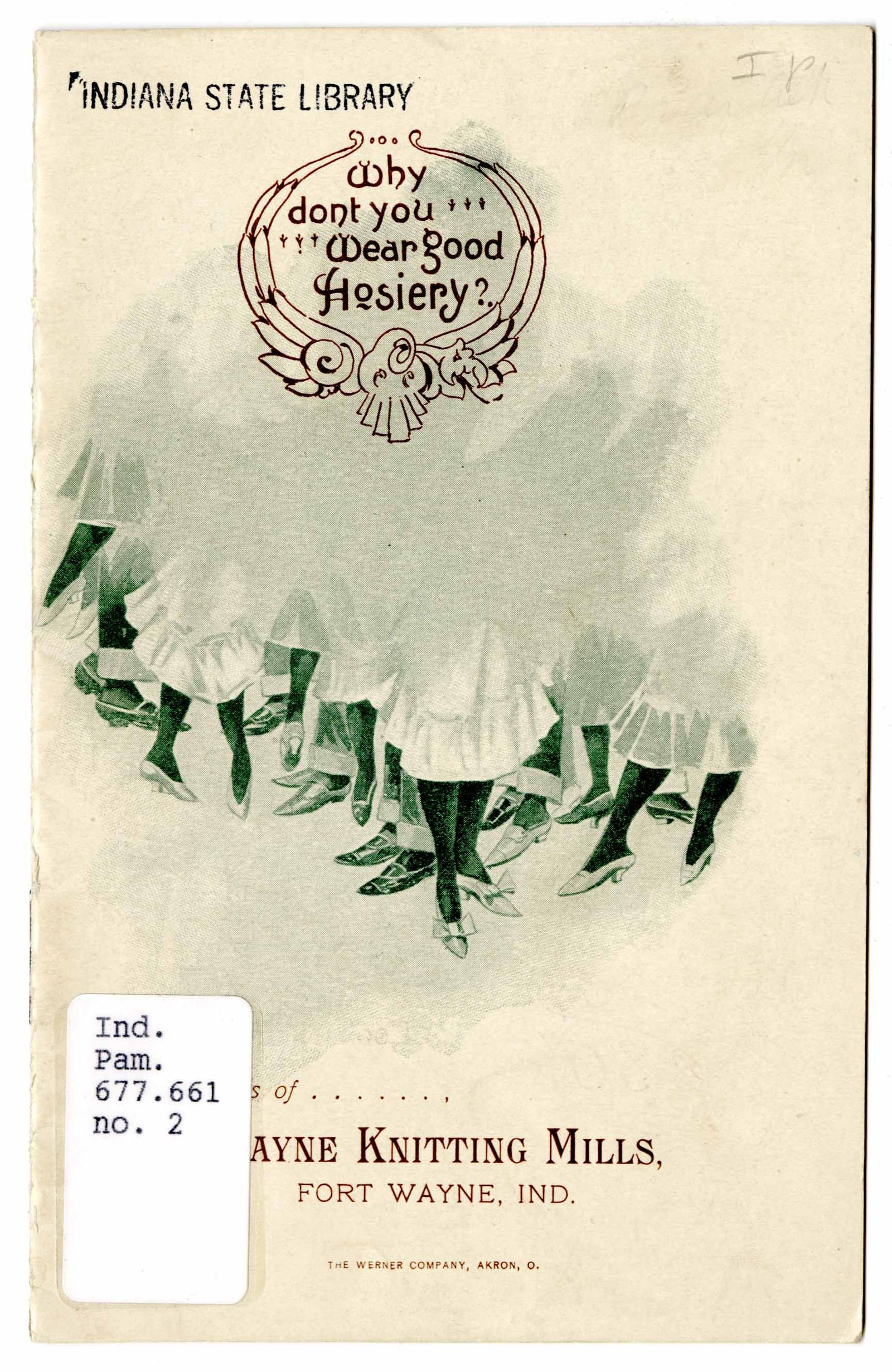
Wayne Knit: the stocking Fort Wayne sold to America
1891 — 1960
A fashion good, marketed like one: What Wayne Knitting Mills made was not a commodity but a garment with a look — full-fashioned hosiery, knit on imported German machinery to the contours of the leg, at a moment when practically…
Thieme Brothers silk hosiery, and the family's clothing trade
1909 — c. 1925
The silk line beside the cotton giant: In 1909 Theodore F. Thieme brought his brother John into a second company, Thieme Brothers Hosiery, organized to work the silk end of the trade while Wayne Knitting Mills ran at…
Workwear: gloves for the shops, socks for the army
1918 — 1919
The other end of the clothing trade: Fashion was the famous end of Fort Wayne clothing; the working end is documented in a single federal snapshot. The Woman in Industry Service's memorandum of October 1918, surveying the city's…
Vera Bradley: the quilted bag as a Fort Wayne fashion house
1982 — present
A design idea first: Vera Bradley began as a fashion observation. In March 1982, Fort Wayne neighbors Patricia R. Miller and Barbara Bradley Baekgaard, waiting out a flight in Atlanta, noticed that the luggage rolling past them…
Wolf & Dessauer: the Crystal Room and the lunchtime fashion show
1896 — 1969
Where Fort Wayne went to see the clothes: For the first two-thirds of the twentieth century, Fort Wayne fashion was retailed from one address. Wolf & Dessauer — the firm's corporate story is the Business section's — sold style…
The Grand Leader, Stillman's, and the move to the malls
1913 — 1974
The second house, and then the suburbs: Downtown fashion had a second pole. The Grand Leader opened on 15 October 1913 at Wayne and Calhoun in the remodelled White Fruit House quarters, billed as "Fort Wayne's newest department…
Bill Blass: the dressmaker's son from South Calhoun Street
1922 — 2002
Born and raised here, precisely: William Ralph Blass was born in Fort Wayne on 22 June 1922 and grew up at 3618 South Calhoun Street, across from the high school he attended. His father, Ralph, a traveling hardware salesman, died…
Beauty culture: trained in Indianapolis, practiced on Hanna Street
Early — mid twentieth century
The Walker system, at Fort Wayne distance: Madam C. J. Walker herself was Indianapolis — her factory, her fortune, and her training school stood there, not here, and this record does not move them. What reached Fort Wayne was her…
Kept in the cases: the fashion record in Fort Wayne's collections
1932 — present
What the city kept of its own style: Fort Wayne's fashion survives in its institutions' cases (the museums themselves are the Museums section's). The History Center holds the trade's advertising made solid: a painted Wayne Knit…