The exact page text, read by your browser's voice.

Newspapers & Media — the Press as an Institution
Fort Wayne has been a newspaper town since 1833, when its first press was set up on West Columbia Street for a village of about three hundred people, and a broadcasting town since the 1920s, when a station above an auto-supply store grew into one of the most powerful radio signals in America. This chapter treats the press as an institution: the papers as editorial voices and rivals, the journalists who made the record, and broadcasting as a civic presence in the city's homes. The newspaper and station companies as businesses — their foundings, ownership lines, and fates as firms — are in the Business record and are cross-referenced here in brief; this chapter is about what the media did in the life of the city, not what they were worth.
The First Press — the Sentinel of 1833
Fort Wayne's first newspaper was an invited one. In 1833, interested citizens of the town promised $500 in backing — the subscribers named in the record are Henry Rudisill, Dr. Lewis G. Thompson, Joseph Holman, C. W. Ewing, Allen…
The Whig Answer — the Times and John W. Dawson
The Sentinel's rival arrived with the Whig Party. The Fort Wayne Times was established by George W. Wood — the merchant who became Fort Wayne's first mayor — dated 1840 in the Business record on the strength of a surviving issue…
One Year of Abolition — the Fort Wayne Standard, 1854–1855
For one year, Fort Wayne had a radical paper. The Fort Wayne Standard, published weekly from June 1854 to June 1855 by Daniel W. Burroughs — a New England-born former abolitionist pastor from Ohio — editorialized for Free Soil…
A Crowded Field — Gazette, Journal, and Daily News
The Civil War made Fort Wayne a three-daily town, and party politics made each paper. The Fort Wayne Gazette was first printed on May 2, 1863, by printer David W. Jones, with Republican attorney Isaac Jenkinson writing the…
The German-Language Press — Eighty-Four Years in German
No part of Fort Wayne's press was more distinctive than the part its largest community read in its own language. The German-language press ran in the city for eighty-four years, from 1843 to 1927, and at its height German Fort…
The News-Sentinel Is Made — the 1918 Merger and the Foellingers
The modern Fort Wayne press was created by a merger of rivals inside the Sentinel line. The News Publishing Company, publisher of the Daily News, purchased the Sentinel in 1917, and on January 1, 1918, issued the first edition of…
The Journal Gazette Is Made — 1899 and the Locally Owned Morning Paper
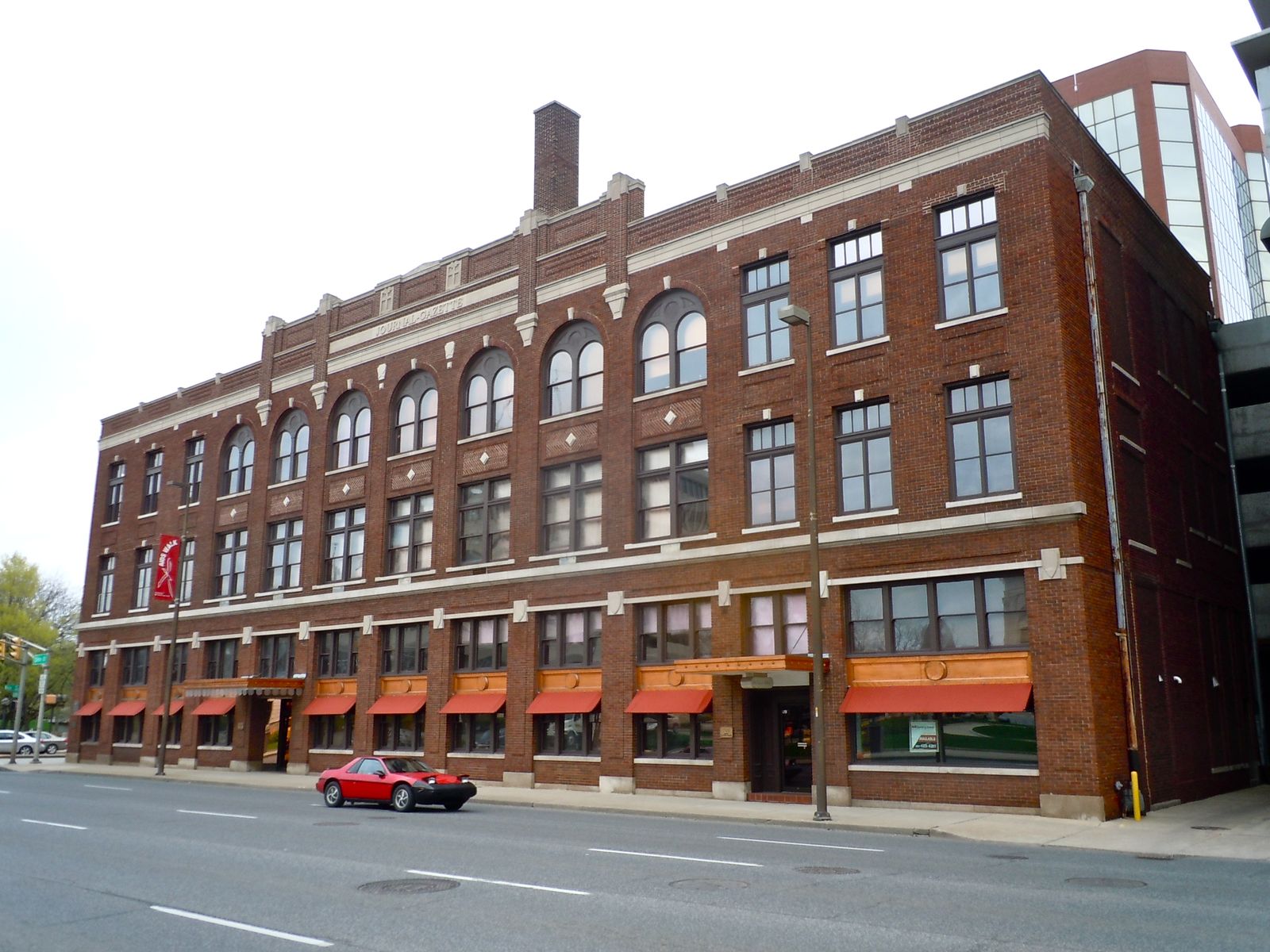
The Gazette's purchase by the Journal in the spring of 1899, and the first Journal-Gazette masthead of June 14, 1899, did more than combine two papers: it reversed a party. The Gazette had been founded in 1863 as a Republican…
Two Newsrooms, One Press — the Joint Operating Agreement
In 1950 Fort Wayne's rival dailies did something almost no American papers had done: they merged everything except the news. The arrangement Helene Foellinger formed with the Journal Gazette was one of the first joint operating…
The Rivalry as a Civic Institution
For most of the twentieth century, Fort Wayne argued with itself in two voices, morning and afternoon. The Journal Gazette, Democratic in inheritance and liberal in its modern editorial identity, and the News-Sentinel, Republican…
Jesse Greene and the News and Sentinel's War on the Klan
The most consequential editorship in Fort Wayne's press history belongs to Jesse Austin Greene (1867–1923), and it belongs — the point matters, and is sometimes gotten wrong — to the afternoon paper. Greene was born in…
Helene Foellinger — the Publisher
Helene Ruth Foellinger (1910–1987) ran the News-Sentinel for forty-five years and, in doing so, ran a large part of Fort Wayne's civic life. She was a newspaper prodigy first: valedictorian at South Side High School in 1928…
The Journalists
Beyond Greene and Foellinger, the press record holds a line of editors and columnists whose work was the city's daily literature. Claude G. Bowers (1878–1958) edited the Journal Gazette from 1917 to 1923, arriving as secretary to…
The Pulitzer and the Contraction — 1982 to 2020
The News-Sentinel's finest hour came near the end of its strength. For its coverage of the devastating Fort Wayne flood of March 1982 — coverage the Pulitzer board called courageous and resourceful — the paper won the 1983…
WOWO — the Voice of WOWOland
No Fort Wayne medium ever reached further into the city's life — or beyond it — than WOWO. The station was first licensed to the Main Auto Supply Company and signed on March 31, 1925, with 500 watts, from studios above the store…
The Other Signals — WGL, WKJG Radio, FM, and Public Radio
WOWO was not Fort Wayne's first station, only its biggest. The city's first broadcasting thread runs through Chester Keen and the Lauer Auto Company: Keen built a transmitter and put a station on the air in the early 1920s — the…
Television — Three Stations on West State Street
Television came to Fort Wayne on November 21, 1953, and the first face it wore was Hilliard Gates's. WKJG-TV, channel 33, signed on that evening as an NBC affiliate — Kunkel's station, its call letters binding newspaper and…
The Fourth Station and the Public One — WFFT and WFWA
Fort Wayne's fourth commercial station arrived as an outsider and made a virtue of it. WFFT, channel 55, signed on December 21, 1977, as an independent — one of the smallest markets in America to sustain an independent station …
The Black Press — from the Observer to the Ink Spot
Fort Wayne's Black community built its own press because the dailies were not built for it. The catalog record is thin at the start — the Library of Congress list of Indiana's African American newspapers attests a Fort Wayne…
The Alternative and Digital Layers — Free Press, Magazines, and the New Press
Underneath the dailies and the stations, Fort Wayne grew the same alternative strata as every American city of its size. The counterculture's paper was the Fort Wayne Free Press, an underground biweekly published from 1970 to…