The exact page text, read by your browser's voice.

Local Animals
Every other section of this record counts people. This one counts the other inhabitants: the deer and wolves of the first accounts, the pigeons that broke tree limbs over South Wayne, the mussels still holding on in the rivers, the eagles that came back to nest inside the city, and the coyotes and beavers that live downtown now. The record is kept the way the rest of this history is kept. A species is said to be here when an account, a roster, or a survey with a date says it was here. A species is said to be gone when the record stops — and the record's own "last" dates are printed as the record gives them, with their sources, because last-animal stories are the easiest facts in local history to invent and the hardest to check. Where the sources disagree, both are printed. Where no Fort Wayne or Allen County record could be reached at all — and that is true for several famous animals — the file says so in plain words rather than borrowing a neighboring county's story.
The first accounts: a country full of game
The 1820s–1850s, as the county histories record them
The baseline: The first written descriptions of the confluence country describe an animal abundance that the rest of this section is measured against. The 1889 Valley of the Upper Maumee River , Brant & Fuller's history of Allen…
The fur trade's ledger: the first animal census is an invoice
The French era to 1859
The trade: For a century and a half before there was a city to count anything, the animal population of the confluence country was counted in bales. The Indiana Magazine of History 's early article "Wild Animals of Indiana"…
Bounties, taxes, and the wolf
1824 — 1908, and one wolf in 2003
Paid in scalps: The earliest Allen County record of the wolf war is fiscal. The county's early history, as reprinted in the Allen County genealogy record, describes the first tax years after the county's organization in 1824 …
The vanished: bear, panther, bison, elk
Last records, 1810 — 1871
The bear: Black bears were, in the DNR's words, "historically abundant across Indiana, excluding the northwest portions of the state dominated by prairie," and Allen County's first accounts agree — bears in Cedar Creek Township…
The pigeons: the bird that broke the branches
The 1840s — 1914
Fort Wayne's roosts: The passenger pigeon is the one vanished animal Fort Wayne remembers in its own voice. The Allen County record, gathered on the Genealogical Society's passenger pigeon page, keeps two neighborhood memories.…
Deer: gone for forty years, then everywhere
1893 — today
The disappearance: The animal that opens this section — Castleman's drove of forty-five — is also the state restoration program's founding fact. The Indiana DNR's deer history, as carried on the Allen County deer page, runs in…
The rivers' fish: sturgeon water to carp water, and partway back
1812 — the present surveys
The soldiers' river: The earliest dated fish record on the Maumee comes from its lower river in wartime. Crail and Grabarkiewicz's Guide to the Common Fishes of the Toledo Area (2008) records that soldiers stationed at Fort Meigs…
The mussel beds: the river's quiet census
The Maumee basin, surveyed to 2025
Why mussels: Freshwater mussels are the Maumee system's longest-lived residents and its strictest water-quality witnesses, and the basin's documented mussel fauna is the richest animal record this section has after the birds.…
The animal that is not here: the hellbender
The documented Indiana range, to the present
Absent, on the record: The hellbender's presence is stated absent. Indiana's hellbender — North America's largest salamander, up to two and a half feet, state-endangered — belongs to the rocky, swift tributaries of the Ohio. The…
The returns I: otter and beaver, the fur animals back
1935 — 2005
The otter: The river otter was the fur trade's second prize and its second disappearance: native populations "declined sharply through the early 1900s due to unregulated harvest and habitat loss and were believed extirpated from…
The returns II: eagle, turkey, and the downtown falcons
1956 — the present
The turkey: The wild turkey of Muller's Cedar Creek farm was extirpated from Indiana by 1900 — S. E. Perkins III's 1930 Wilson Bulletin notes give the last reports as Knox County 1894 and Gibson County 1897, with the bird's last…
The new neighbors: coyote, bobcat, and the watched city
2012 — the present
The coyote: The wolf's smaller cousin arrived without any program at all. Fort Wayne's documented city record runs through its newspapers and its police: in April 2012 the News-Sentinel published a photograph of two coyotes…
The marsh rebuilt: Eagle Marsh and the carp line
2005 — the present
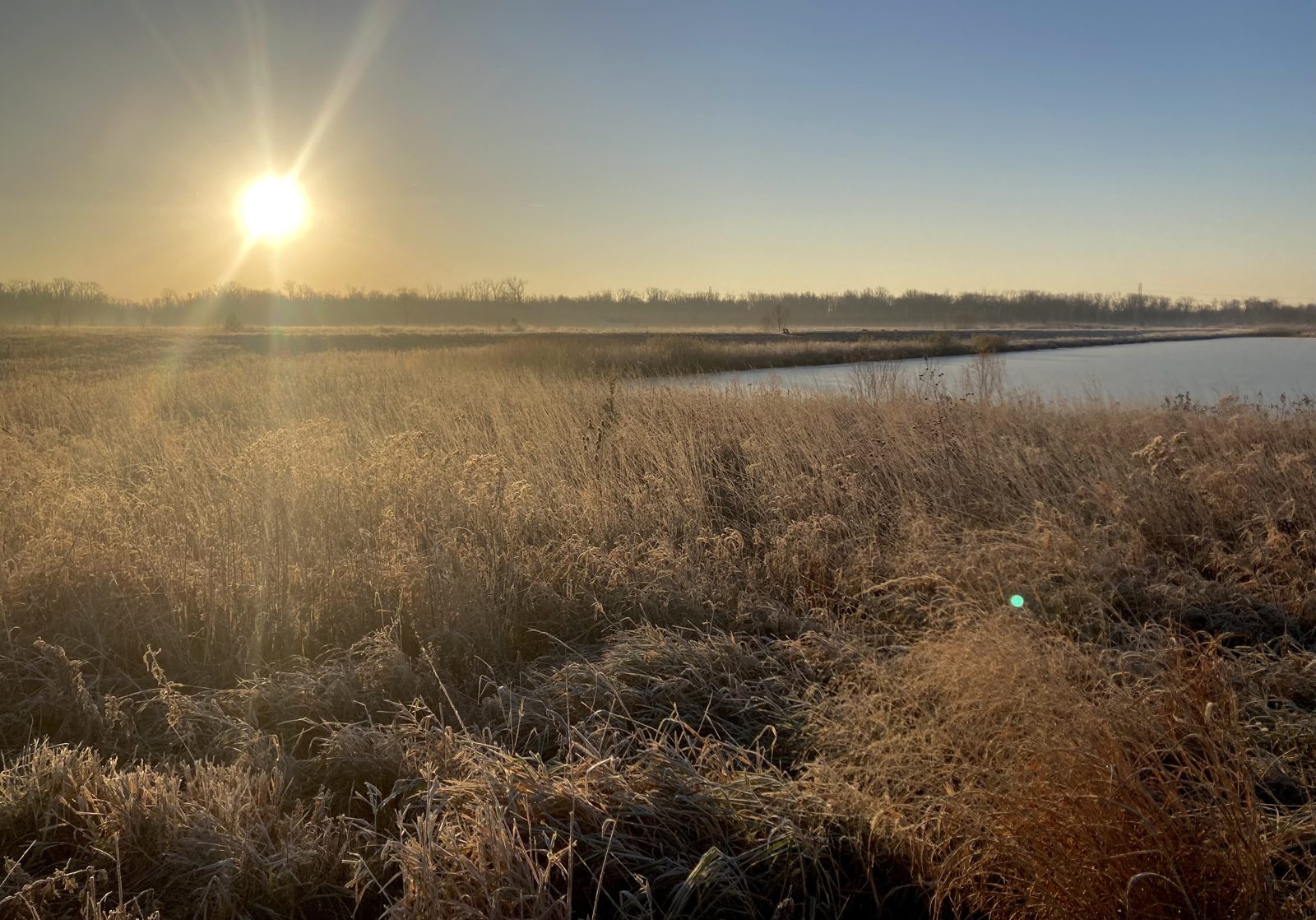
The place: Eagle Marsh, 831 acres on Fort Wayne's southwest edge, is the Great Marsh of the first accounts partially put back. The Little River Wetlands Project established the preserve in 2005 on farmed wetland in the Little…
Kept animals: the stockyard and the zoo
1877 — the present
The stockyard: The domestic animal record of Fort Wayne is a packing-house record. The Fred Eckart Packing Company — founded in 1877 in the county record; its great West Main Street plant opened in 1887 in the News-Sentinel's…
The count today: what the checklists say lives here
1938 — the present lists
The baseline count: Fort Wayne's bird record has a starting line with a date on it. The Fort Wayne Christmas Bird Count of 24 December 1938, printed in Bird-Lore and recovered by the Stockbridge Audubon Society — itself founded…