The exact page text, read by your browser's voice.

Medical Advancements · what Fort Wayne medicine made, proved, and did first
This section is the advancement record of Fort Wayne medicine — not the hospitals, which are profiled as institutions in the Hospitals record, and not the epidemics, which are the Epidemics record's, but the things Fort Wayne medicine produced and gave to medicine at large: a wire technology inside devices used around the world, a run of clinical firsts in heart care, the region's transplant era, the state's first verified trauma program outside its capital, and the research houses the city built in the twenty-first century. The honest shape of the record should be stated at the top. Fort Wayne's famous device contribution is upstream: materials and components — wire, strand, cable, and finally melted nitinol — that other companies turn into stents, guidewires, leads and valves. The implant brands of American orthopedics belong to Warsaw, thirty-five miles northwest, and the entry below says so plainly. What Fort Wayne originated, it originated in the melt shop, the cath lab, the operating room, and the research center, and each claim here is carried at the size and scope its source asserts.
Miles F. Porter and the age of bold surgery
1878 — 1933
A national surgeon in a canal city: The first Fort Wayne physician whose work reached national medicine was Miles F. Porter (1856–1933), born in Decatur, who took his medical degree from the Medical College of Ohio in 1878 and…
Fort Wayne Metals: from recording wire to medical wire
1946 — the medical company, 1970
The strand that held a heartbeat: Fort Wayne's largest medical advancement began as a wire shop. Ardelle Glaze founded Fort Wayne Metals in 1946 to make magnetic recording wire — the founder's life and his first company, which by…
The materials themselves: DFT wire, strands, cables — components inside devices worldwide
1970 — today
Two metals in one wire: The company's signature technology after the strand is DFT® wire — drawn filled tubing, a composite that joins dissimilar metals in a single wire system, so that one wire can carry the properties of two: a…
The nitinol melt: Fort Wayne learns to make the metal itself
1991 — 2026
From drawing wire to melting ingot: Nitinol — the nickel-titanium alloy that remembers shapes and flexes without kinking, on which stents, heart valve frames and modern guidewires run — was for decades melted by a handful of…
Components, not implants: the Warsaw distinction, stated plainly
1895 — today
The implants are Warsaw's; the wire is Fort Wayne's: Any honest account of Fort Wayne's medical manufacturing has to draw the line thirty-five miles northwest. The orthopedic implant industry — the artificial joints and fracture…
The heart years begin: Lutheran's run of firsts, 1961–1970
1961 — 1970
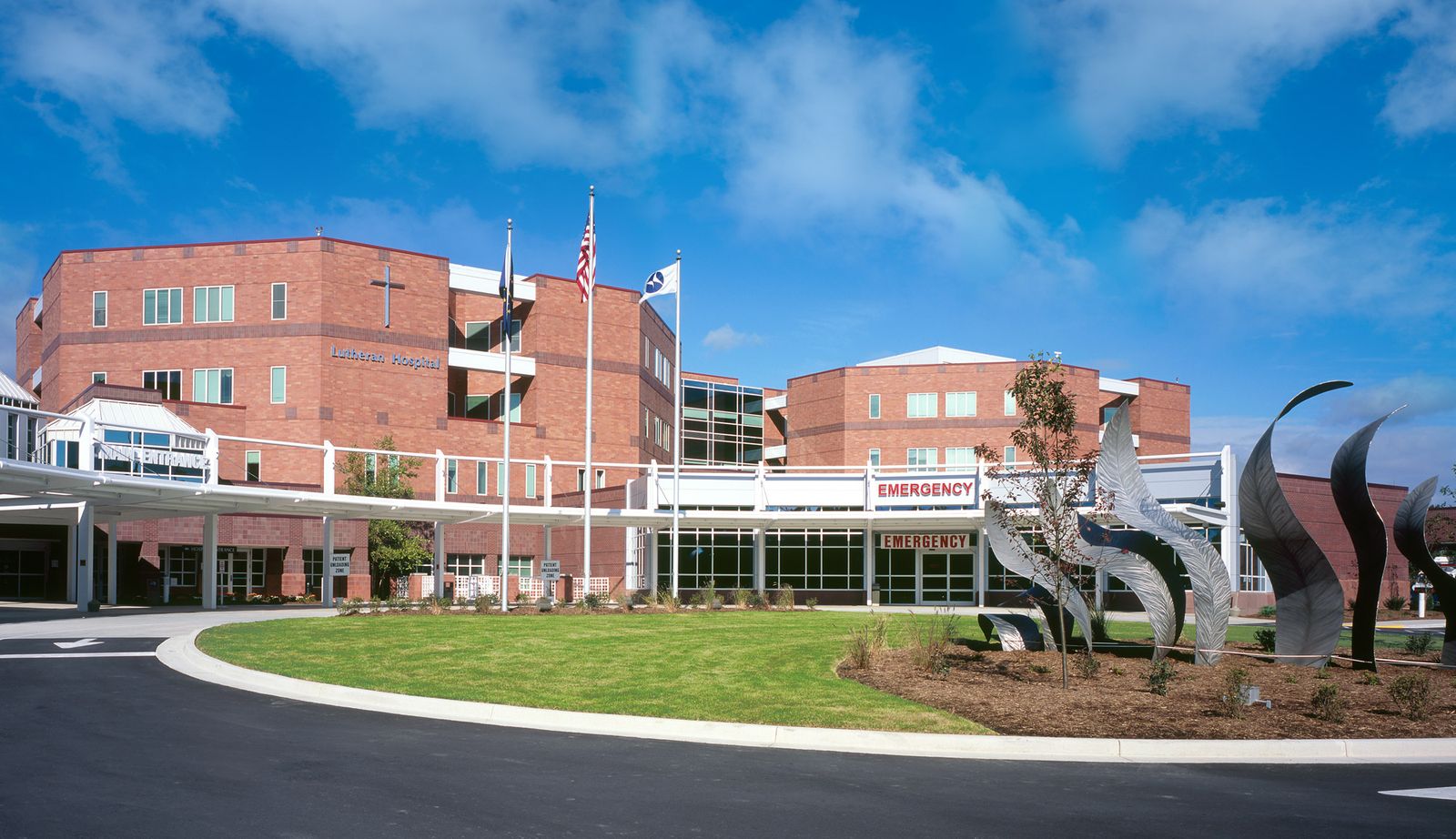
Dialysis, the coronary unit, the bypass: The clinical-firsts record of Fort Wayne medicine is concentrated in one hospital and one decade. Lutheran Hospital — whose institutional history is the Hospitals record's…
Care of the smallest: Parkview's neonatal intensive care, 1979
1979 — 2008
A unit founded by two physicians: Neonatal intensive care came to Fort Wayne as a founded unit with named founders. Dr. William J. Lewis, a neonatologist, started Parkview's neonatal intensive care unit together with Dr. Donald…
The transplant era: a heart in 1985, a kidney in 2007, the close in 2023
1985 — 2 June 2023
Northern Indiana's first heart transplant: In 1985 a Lutheran Hospital team led by Dr. Michael Schatzlein performed the first heart transplant in northern Indiana — the scope most accounts give it; one Becker's Hospital Review…
Trauma, verified: the first verified centers outside Indianapolis
1989 — 2025
An eleven-year road to verification: Parkview's trauma advancement was organizational — the building of a system of injury care to a national standard, in a city that had none. Parkview created its Trauma Services Department in…
The catheter era matures: TAVR and the accredited heart-failure program
2017 — 2021
Valve replacement without opening the chest: Lutheran's later cardiac milestones are adoption firsts — the bringing of new techniques to the region ahead of its peers — and they are printed at the network's own scopes. Lutheran…
A medical school's research campus: IU School of Medicine—Fort Wayne
1981 — today
Four students, then laboratories: Fort Wayne's oldest research institution in medicine is its medical school campus. The program began in 1981 with four students on the IPFW campus; under its second director, Ragatz, from 1987…
Pharmacogenomics: Manchester's Fort Wayne first
2012 — 2016
The nation's first degree in a new science: Manchester University opened its Fort Wayne campus in 2012 with a Doctor of Pharmacy program — northern Indiana's pharmacy school, seeded by a $35 million Lilly Endowment grant whose…
The Mirro Center: a community system's research house
1993 — today
A thousand trials in a community hospital system: Parkview's research predates its research building. The system's clinical research department was founded in 1993, and by its own count Parkview has participated in more than…
The residency's research: the Fort Wayne Medical Education Program
The family medicine residency's scholarly record
Research aimed at the city's own health: The smallest of Fort Wayne's research houses is its family medicine residency. The Fort Wayne Medical Education Program — the community's family medicine residency, based on Broadway …


