The exact page text, read by your browser's voice.

Sources, the archive, and an empty chair
Where every claim on this page can be re-checked, and the gap this record fills.
The History Center (Allen County–Fort Wayne Historical Society, est. 1921), 302 E. Berry St in the 1893 Old City Hall, 32,000+ artifacts, photographs and documents, including the Samuel Hanna papers, the S. F. Bowser & Co. collection, the Magnavox Company collection, and the Civil Defense Records 1939–47 that settled “Fort Wayne was seventh on Hitler's bombing list.”. Mostly in-person or by research request; a digitised subset runs through Purdue Fort Wayne into Indiana Memory. It also keeps the Richardville House and the Barr Street Market (1837). fwhistorycenter.org
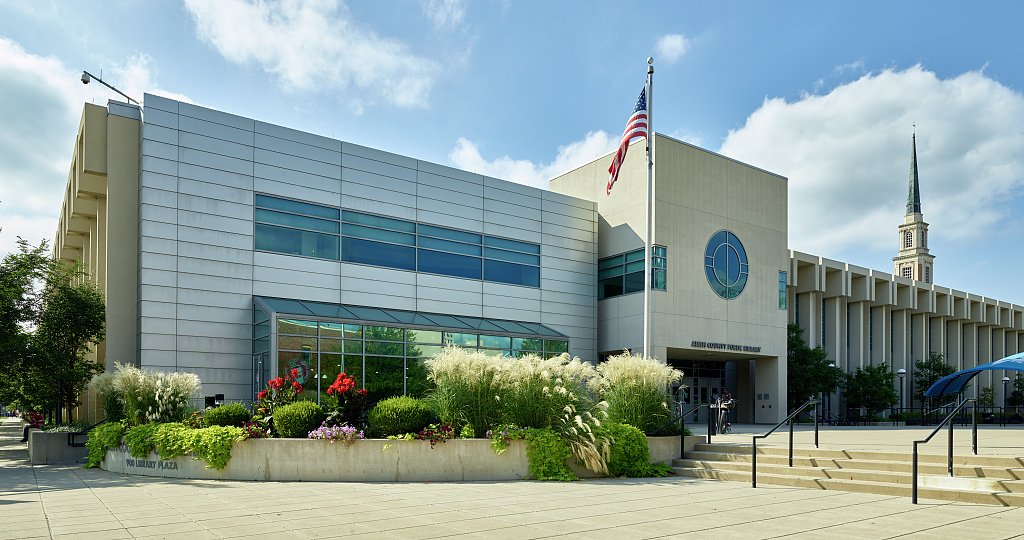
ACPL Genealogy Center, 900 Library Plaza, the largest genealogy collection in an American public library. Fort Wayne newspapers 1833–present on microfilm; city directories 1858–present (the first, Williams' 1858–59, lists 2,668 names); an obituary index of ~800,000 entries, 1837–2024. Free online: the Community Album, obituary/cemetery/marriage/death indexes, PERSI. Licensed databases (Newspapers.com, NewspaperArchive and the like) are free inside the building only. acpl.lib.in.us
The newspaper trap, stated plainly: Hoosier State Chronicles, the state library's free newspaper portal, holds no Allen County titles. Fort Wayne's papers reach the open web piecemeal, the Daily News 1874–1923, Weekly Sentinel 1875–1917 and the Sentinel 1870–1923 through INSPIRE's providers (paywalled or library-login), 10,000+ scanned pages on the Internet Archive, and post-1920s issues effectively on ACPL microfilm. Anyone checking a 1950s Fort Wayne claim from a desk should say so.
Free and primary: treaty texts in the U.S. Statutes at Large and hundreds of scans in the National Archives Catalog; the 1791 Harmar Court of Enquiry; Sanborn fire-insurance maps for Fort Wayne (1885, 1890, 1902, 1906, 1918, 1919–51) free at the Library of Congress; pre-1923 city directories on the Internet Archive; Indiana Memory's aggregated collections (855 Fort Wayne results in a sample search); the NWS crest series; the 1984 Delaware flood case study; Ball State's orderly-book transcriptions; and the Myaamia Center's treaty and speech scholarship.
Who else publishes Fort Wayne history: the History Center narrates, with expert care and quiet hedges (“reputed birth place”); ACGSI/INGenWeb's volunteers aggregate thousands of pages with newspaper citations and occasional conflict notes, the closest thing to an evidence culture the city has; Historic Fort Wayne reenacts; ARCH writes the markers; FortWayne.com debunks episodically; the Facebook groups reminisce, unindexed.
The empty chair: as of this record's research (1 November 2026), no Fort Wayne publisher was found that takes a single popular claim, dates it, quotes the contemporaneous record, and publishes a finding. That is the seat this page sits in. (Absence established by web search; closed Facebook groups and print newsletters cannot be audited from outside.)
The six paragraphs above are the short version, and they stand. What follows is the full apparatus — every book, archive, register and newspaper this record actually rests on, with what each one proved here and where a reader can put a hand on it. A source is listed only if it stands behind some part of this history; the notes that trace each use are named in the closing entry.
The books
Griswold, The Pictorial History of Fort Wayne, Indiana (1917)
The canon. Bert J. Griswold, The Pictorial History of Fort Wayne, Indiana: A Review of Two Centuries of Occupation of the Region about the Head of the Maumee River . Chicago: Robert O. Law Company, 1917. Two volumes. Volume I is…
Griswold (ed.), Fort Wayne, Gateway of the West, 1802–1813 (1927)
The documents. Bert J. Griswold, editor, Fort Wayne, Gateway of the West, 1802–1813. Indiana Historical Collections, vol. 15. Indianapolis: Indiana Historical Bureau, 1927. Not a narrative history but a documentary edition: the garrison orderly books and the Indian agency account books of the last American fort, printed from the originals.
What it proved here: the day-to-day texture of the 1812 siege and the agency years — who was ordered where, what the agency bought and from whom — comes from this volume, cross-checked against Ball State's independent orderly-book transcriptions. It is the nearest thing to a Fort Wayne archive in print for the years 1802–1813.
Fed:
- The wars leg (the 1812 order of battle), the government leg (the agency and land-office years), the Story of Fort Wayne section.
Griswold's other Fort Wayne works (1914–1927)
The rest of the shelf. Three further Griswold items bound the canon. A Pictorial History of Fort Wayne, 1614 to 1914 , his full-page chronological series in the Fort Wayne Sentinel in 1914, is the 1917 volumes in embryo. The…
Brice, History of Fort Wayne (1868)
The first city history. Wallace A. Brice, History of Fort Wayne, from the Earliest Known Accounts of This Point, to the Present Period. Fort Wayne: D. W. Jones & Son, 1868. Brice wrote within living memory of the canal era, and his book carries the long Samuel Hanna biography and the pioneer sketches every later writer mines.
What it proved here: Brice corroborates the fort commandant succession (Moore, Jenkinson, Whistler) independently of Griswold, and Griswold himself quotes Brice for the events of 1838–39 — which makes Brice the check on Griswold, not merely his source. Where the two agree against a modern summary, the agreement is printed.
Fed:
- The government leg (commandants), the land leg, the Story of Fort Wayne section.
History of Allen County, Indiana (Kingman Bros., 1880)
The 1880 county history. History of Allen County, Indiana, with Illustrations and Biographical Sketches of Some of Its Prominent Men and Pioneers . Chicago: Kingman Brothers, 1880. Township maps, plates and sketches, and — read…
Brant & Fuller, Valley of the Upper Maumee River (1889)
The 1889 county history, read first-hand. Valley of the Upper Maumee River, with an Account of the Towns, Villages and Townships . Madison, Wisconsin: Brant & Fuller, 1889. Two volumes; Volume I narrative, Volume II biographical…
Taylor (ed.), History of Allen County in the World War (1920)
The service record. Isabelle H. Taylor (Mrs. Samuel R. Taylor), editor, History of Allen County in the World War . Fort Wayne: Public Library of Fort Wayne and Allen County, 1920. Sixteen volumes: Volume 1 narrates the county's…
Indiana Gold Star Honor Roll (1921)
The state's roll of the dead. Gold Star Honor Roll: A Record of Indiana Men and Women Who Died in the World War. Indianapolis: Indiana Historical Commission, 1921. Allen County's entries begin at page 18. Used here alongside ACGSI's county summary (over 100 Allen County dead) and Taylor's service records: three independent rolls, checked against each other name by name where the wars leg prints a name.
Fed:
- The wars leg.
Charter and Revised Ordinances of the City of Fort Wayne (1887)
The city's own book. Charter and Revised Ordinances of the City of Fort Wayne, Indiana. Fort Wayne, 1887. Read first-hand in full text at the Internet Archive (charterrevisedor00fort). Its front matter carries the "Chronological Roster of Officers, 1840–1887," arranged by the city clerk, W. W. Rockhill — the city's own succession list, compiled by the office that kept the records.
What it proved here: the roster is the document that carried the city clerk succession back from 1888 to 1840 in one pass, and with the directory officer pages it fixed the comptroller's line 1894–1923 and bounded the office's later title change. When a modern list and Rockhill disagree, Rockhill is the one who was there.
Fed:
- The government leg (clerk, comptroller and court successions).
Bates, The Water-Powered Mills of Allen County, Indiana (1942)
The mills, located. Roy Bates, The Water-Powered Mills of Allen County, Indiana, 1942. For years this study was cited locally as an undigitized manuscript; it is in fact digitized, and the business leg worked from the Internet Archive copy (waterpoweredmill00bate, the ACPL copy) — a correction this record prints because the earlier assumption had kept the mills out of reach.
What it proved here: Bates numbered and mapped the county's water-powered mills; six of his city mills anchor entries in the business record, each checked against the directory and newspaper trace. His remaining mills stand in the townships and are held with the county-scope question, except where Bates himself groups a mill with the city cluster.
Fed:
- The business leg.
Beatty, Historical Sources of Fort Wayne, Indiana (2000)
The field's own bibliography. John D. Beatty, Historical Sources of Fort Wayne, Indiana: An Annotated Bibliography for Doing Historical Research on the Summit City in the Allen County Public Library . Fort Wayne: Allen County…
Beatty & Robb (eds.), History of Fort Wayne & Allen County, Indiana, 1700–2005 (2006)
The modern standard work — with our use of it stated plainly. John D. Beatty and Phyllis Robb, editors, History of Fort Wayne & Allen County, Indiana, 1700–2005 . Evansville: M. T. Publishing Company, 2006. Two volumes, published…
Slater-Putt, Beyond Books (1995)
The library's own history. Dawne Slater-Putt, Beyond Books: Allen County's Public Library History, 1895–1995. Fort Wayne: Allen County Public Library, 1995. Full text open at the Internet Archive. Chapter 4 holds an entry for every branch, and the narrative carries the directorship succession and the building campaigns entire.
What it proved here: the libraries leg is built on this book's spine — the 1895 founding, the Carnegie branches, the postwar building program — with each of its claims that we print checked forward against the library's own later record (the 2007 main library expansion, the branch renewals, the directors after 1995). It is also the model of what an institution's centennial history can be when the institution keeps its own records and lets its librarian write them.
Fed:
- The libraries leg.
Doxsee, A History of the Allen County Bar and Courts, 1824–2019 (2019)
The courts. Donald Doxsee, A History of the Allen County Bar and Courts, 1824–2019 . Fort Wayne: Allen County Bar Foundation, 2019. The book is not on the Internet Archive; its findings reached this project through The Indiana…
The Myaamia shelf: Costa, the Myaamia Center, and the Miami historians
The people's own record. David J. Costa, editor and translator, myaamia neehi peewaalia aacimoona neehi aalhsoohkaana: Myaamia and Peoria Narratives and Winter Stories . Oxford, Ohio: Myaamia Project at Miami University, 2010…
Poinsatte, Outpost in the Wilderness (1976)
The fort years. Charles R. Poinsatte, Outpost in the Wilderness: Fort Wayne, 1706–1828. Indianapolis: Indiana Historical Bureau, 1976. The standard scholarly account of the French, British and American posts at the confluence.
What it proved here: Poinsatte is the land leg's measure of the portage (his seven miles stands in print beside the 1959 marker's eight and Croghan's nine — a family of measures, reconciled by the News-Sentinel's account of drought and flood carries, not averaged away), and the source of Little Turtle's "glorious gate" words in their Greenville-council context. Where Poinsatte and the orderly books differ, the orderly books govern.
Fed:
- The land, before-the-city, government and spine legs.
The treaty record in print: Kappler, the Statutes at Large, Thornbrough
The paper the land changed hands on. Charles J. Kappler, compiler, Indian Affairs: Laws and Treaties , vol. II (Treaties). Washington: Government Printing Office, 1904 — read with the underlying texts in the U.S. Statutes at…
The ground itself: Leverett & Taylor, the ROI reports, Fleming
The geology under the city. Frank Leverett and Frank B. Taylor, The Pleistocene of Indiana and Michigan and the History of the Great Lakes , U.S. Geological Survey Monograph 53 (1915) — the glacial frame of the Maumee plain. The…
The Appleseed shelf: Fortriede, Price, Kerrigan, Haley
One man, four treatments. Steven Fortriede, Johnny Appleseed: The Man Behind the Myth (Fort Wayne Public Library, 1978) — the local librarian's account, written from the Fort Wayne records. Robert Price, Johnny Appleseed: Man and…
The pioneers' own voices: McCulloch, Dawson, Comparet, Howe
Memoir and sketch. Hugh McCulloch, Men and Measures of Half a Century (New York: Charles Scribner's Sons, 1888) — the Fort Wayne banker who became Lincoln's Treasury Secretary, remembering the town he arrived in in 1833. Jacob…
Business history in print: Linkous, Nelson, Harter, Shideler
The company histories. The General Electric century in Fort Wayne rests on Linkous's General Electric of Fort Wayne, read through the News-Sentinel's account of it and through Scott M. Lindquist's "Electric Works" paper for the Quest Club (2023) — the club whose members' papers are a Fort Wayne institution in themselves. Don Nelson, The Zollner Piston Story (1995), is the piston works' own history. Randy Harter's Wayne Candies history (2017) and his Postcard History: Fort Wayne carry the candy trade and the photographic streetscape respectively. James Shideler's account of Fort Wayne's "pyramid banks" is the business leg's authority for the Depression-era banking oddity it names.
Fed:
- The business and wealth legs.
Church history in print: Bertram, Blanchard, and the congregations' own books
Written by the congregations. Herman Bertram, A Brief History of St. Paul's Evangelical Lutheran Church, 1837–1962 (1962; open at the Internet Archive) — one congregation's 125 years, from the inside. Charles Blanchard, ed.…
The local shelf: society and library publications
Fort Wayne publishing about itself. The Gilded Age in Fort Wayne, 1870–1900 (Public Library of Fort Wayne and Allen County, 1955). Fort Wayne in Canal Days (Indiana Historical Society). The Wabash–Erie Canal (Public Library of…
The newspaper reconstructions: Battin (1990, 1994) and Jarosh
When the files were gone, the papers remained. Richard Battin, "Killer in the Rain," News-Sentinel , 5 February 1994 — read in full. Fort Wayne's police case files for the 1940s murders were lost or destroyed; Battin rebuilt the…
The archives and collections
The Genealogy Center, Allen County Public Library
The working archive of this whole record. 900 Library Plaza. Beyond the holdings in the introduction — newspapers 1833–present on microfilm, the obituary index of some 800,000 entries (1837–2024), the Community Album, PERSI — the…
The History Center
The county's museum and manuscript archive. The Allen County–Fort Wayne Historical Society (est. 1921), in the 1893 Old City Hall at 302 E. Berry Street. The introduction gives the shape: a collection the Center itself currently…
The City of Fort Wayne's own archive.org corpus
The city, digitizing itself. The City of Fort Wayne maintains three collections on the Internet Archive, and their scale is the comparison's finding: more than 16,000 city documents, more than 13,000 City Clerk documents, and…
Indiana Memory
The state's aggregated digital library. Indiana Memory gathers the digitized collections of the Indiana State Library, the Indiana Historical Society, the universities and the local societies into one searchable whole; a sample search returns 855 Fort Wayne results. The legs' prize from it is the John Tipton Collection: the Indian agent's own paper, including the receipt of 12 August 1823 for salt and the annuity receipt of 27 August 1824 — $18,400 in silver and 190 bushels of salt, signed by ten chiefs — the land transactions of the land leg, in the hand of the man who conducted them. Purdue Fort Wayne's digitization feeds Fort Wayne material into the same pool.
Fed:
- The land, government and tribes legs.
The State Board of Accounts record: rosters and audit schedules
The unglamorous source that settles successions. Two state series did the government leg's heaviest modern lifting, and their limits are part of the record. The Indiana Roster of State and Local Officials (editions of 1936–1987…
SHAARD and the National Register files
The state's building-by-building record. The Indiana State Historic Architectural and Archaeological Research Database (SHAARD) and the National Register of Historic Places nomination files behind it: 83 Allen County listings at the time of the Architecture section's count, two of them National Historic Landmarks. A nomination is a researched mini-history — statement of significance, bibliography, building chronology — and the Architecture section treated the best of them as primary literature: the Richardville House nomination (the house under its Myaamia name, Akima Pinšiwa Awiiki), the Meshingomesia Cemetery and Indian School district nomination (which carries tribal history the county histories slight), and the courthouse file. ARCH, Fort Wayne's preservation organization, works from its street files to the same standard, with citations, in its Heritage Trail entries.
Fed:
- The architecture, tribes and before-the-city legs.
Lindenwood Cemetery records
The city's roll of its dead. Lindenwood Cemetery, opened 1859, holds the records of more than 74,000 interments. For a history of a city, a great cemetery's register is a census of everyone the directories missed, and the people and wealth legs used it the way genealogists do: burial dates settle death dates, family lots settle kinship, and the cemetery's own Pioneers Resting in Historic Lindenwood (1989) is the biographical companion. The Catholic cemeteries' and the ACHS/ACGSI cemetery readings stand beside it in the same work.
Fed:
- The people, wealth and folklore legs.
The Lincoln Collection at the ACPL
A national collection, kept in Fort Wayne. The Lincoln Financial Foundation's collection — formed from 1928 around the Lincoln National Life Insurance Company of Fort Wayne — was given in December 2008 to the people of Indiana, to be shared by the Indiana State Museum and the Allen County Public Library. The library's share came to Fort Wayne in 2009; the Rolland Center for Lincoln Research opened in the main library on 10 January 2022; and the collection's digitization runs on the Internet Archive, free to anyone. It is in this record for two reasons: it is one of the city's claims on the nation's history, and its presence explains the depth of the library that houses the Genealogy Center — Fort Wayne keeps other people's archives the way it keeps its own.
Fed:
- The libraries and current legs.
The National Archives
The federal paper. The National Archives Catalog's Fort Wayne scans — treaty records, agency correspondence, the 1791 Harmar Court of Enquiry — are free and primary, and the introduction lists them. Two bodies of federal paper the legs did not exhaust are named here so the next researcher starts where we stopped: the Indian Agency records' year-by-year annuity totals for 1813–19 and 1825–28, which would let the land leg replace Rafert's summaries with the payments themselves; and the Archives' casualty files by home county, the named route to the Korean and Vietnam county death totals the wars leg could not responsibly print from any source it reached. Both are open work, stated as such in the legs' notes.
Fed:
- The land, tribes, government and wars legs (and their stated gaps).
Ball State, the Library of Congress, and the university shelves
The scholarly infrastructure. Ball State University's digital collections hold The Forts of Fort Wayne exhibit and the garrison orderly-book transcriptions against which Griswold's Gateway of the West edition was checked, and its…
ACGSI and Allen INGenWeb: the volunteers' archive
Thousands of pages, kept by hand. The Allen County Genealogical Society of Indiana and its INGenWeb pages aggregate what no institution has: cemetery readings, church histories, Civil War company rosters (the wars leg's Camp…
The databases and registers
The sports registers
Checked name by name. The sports register was built athlete by athlete out of the standard registers, each of which keeps a birthplace roll that can be audited: Pro Football Reference (the Indiana birthplace roll), Basketball…
NCES Common Core of Data, and the Census
The counted present. The schools leg's Fort Wayne Community Schools figures — 28,549 students in 2024–25, 51 schools, a 13.40-to-1 student-teacher ratio, district ID 1803630 (IN-0235) — are the National Center for Education Statistics' Common Core of Data, the federal census of schools, not the district's publicity. The communities and current legs run on the Census Bureau's own products: QuickFacts for the city's headline numbers and the American Community Survey for the detail — including the figure that defines modern Fort Wayne's largest new community: 9,404 residents of Burmese ancestry in the metropolitan area in the ACS 2024, 2.1 percent of the metro and the highest Burmese share of any metropolitan area in the United States.
Fed:
- The schools, communities and current legs.
The IRS Form 990 series
The charities' audited selves. Every substantial charity in the charities leg is stated from its own federal return — the Form 990 and 990-PF series, read through the ProPublica Nonprofit Explorer and Intellispect — because a 990…
Storm and flood data: SPC, NWS, FEMA, USGS
The weather, from the instruments. The disasters record is built from the Storm Prediction Center's and National Weather Service's own data: the NWS Northern Indiana office's county tornado record (32 Allen County tornadoes…
The official election returns
Counted votes, not impressions. Where this record reports an election, it reports the returns: the county's official and unofficial-final tabulations, the Secretary of State's canvass, and the statutes that govern the question.…
The bank records: FRASER, the Comptroller, the FDIC
Charters and failures, from the regulators. The business leg's banking history rests on the Federal Reserve's FRASER archive (the Fed's own historical library: bank-status lists of 1935 and 1966 among them), the Comptroller of the Currency's Table 15 of national-bank charters, and the FDIC's branch and institution records — the Fort Wayne National Bank's charter at 110 West Berry, established 30 October 1933, is stated from the regulator's record, not from the bank's memory. One limit is stated in the leg's notes and repeated here: the FDIC's BankFind interface itself was not reachable through the routes available to this research session; the branch records used were reached through the FDIC's published data, and any charter detail a reader cannot reproduce should be checked in BankFind directly.
Fed:
- The business leg.
The current city's registers: Congress, GFW, the employers themselves
For the living city, the primary sources are filings and fact sheets. The Biographical Directory of the United States Congress carries the representation succession the government leg prints (Tipton to Stutzman, with each…
The newspapers of record
The Sentinel line, and the papers of the first century
Where the nineteenth-century record lives. Fort Wayne's first papers — the Times and the Sentinel of the 1830s and 1840s — are the contemporaneous record for the canal city, and this record's single most consequential newspaper…
The Journal Gazette
The surviving daily. The Journal Gazette is Fort Wayne's newspaper of record today, publishing daily behind a paywall; its archive is the paper's own, searchable by subscribers, with the deep backfile again on ACPL microfilm. This record uses it as the dated source for the modern city's turning points — the 2024 mayoral caucus and succession among them — and for the long view in its own pages: it was the Journal Gazette and the scholars writing from its files (the Indiana Magazine of History's 2017 study of editor Jesse Greene's anti-vice and anti-Klan campaigns) that documented the paper's own crusading century. Where a claim rests on a single Journal Gazette report, the report's date is printed with the claim.
Fed:
- The government, current, communities and crime legs.
The News-Sentinel , and the morgue problem stated honestly
A great archive of a paper that no longer prints. The News-Sentinel ceased print publication, and what survives of it online — the archive and history series at its egen.fortwayne.com address: the Cityscapes columns, the decade…
Open questions · the honest tail of the ledger
Who coined “Summit City”?
No contemporaneous 1840s printed use, coiner, or date found. Resolution requires the Sentinel and Times runs on ACPL microfilm and the canal commissioners' reports.
1969 or 1970 · the Odyssey demonstration
Indianapolis Monthly dates Baer's Fort Wayne demo to 17 July 1969; Baer's republished chronology says 1970. To be settled from Baer's papers (Smithsonian) before this record prints a year. (see “The Magnavox Odyssey was invented in Fort Wayne.”.)
Which gauge read 26.93 feet?
The History Center label's 1982 crest cannot be matched to the NWS series from anything published online. Needs the City Flood Control / USGS gauge history. (see “In 1982 the river crested at 26.93 feet, 30,000 volunteers saved the city, and Reagan named it ‘The City That Saved Itself.’”.)
What was Richardville actually worth?
No probate valuation found online. The History Center archives or Allen County probate, in person, hold the answer, until then, no dollar figure ships. (see “Richardville was the richest man in Indiana”.)
The rest of the roster book
Mayors are complete in § 04; the historical holders of the clerk's office, the controllership, individual council seats, and the county and township offices are not yet compiled in one verified place. The raw material exists, a 20-page Quest Club paper on the mayors, the city directories from 1858, council minutes at the Clerk's office.
The roster book, since the card above was written
Much of it now stands built: the clerk's line runs 1840 to the present (1887 charter roster, then directory officer pages, then caucus records); the comptroller/controller line runs 1894–1923 with the title change bounded to 1924–1946; the sheriff's line is continuous 1888–1922 and again to the present, with Sheriff Figel's start bounded to 1 January 1983 or 1984; twenty-five boards of county commissioners are compiled. What remains is named in the government leg's notes: the printed State Board of Accounts rosters and the post-1945 Polk directories at the ACPL are the route, because the Internet Archive's directory officer pages end at 1922 and the online roster tables are broken in every volume tried.
What did Barr & McCorkle pay the United States?
The townsite is established — John T. Barr of Baltimore and John McCorkle of Piqua bought the Original Plat, 118 lots on 109 acres in Section 2, Township 30 North, Range 12 East, and the county's consideration ($500 cash, the courthouse square, the church and burial lots) is documented. The price the partners themselves paid the federal government is stated in no source this research reached. The route is named: the Fort Wayne Land Office entries, 1823–1852, at the Indiana Archives.
The county's Korea and Vietnam dead, as a total
Named dead are printed where sources name them; a county total is not, because no source reached compiles one. The National Archives' casualty files, sortable by home county, are the route, and the wars leg's notes mark the task open rather than substituting a memorial count.
How many did the 1918 flu kill in Fort Wayne?
Provably never determined — the contemporary compilation says so outright, and modern research confirms no totals exist. The record prints the case counts and the Influenza Commission's estimate of 5,000 ill, and no death figure. The only route to one is a count of ACGSI's name-by-name death list (ACPL microfiche, April 1918–August 1920); it has not been attempted, and no estimate stands in its place.
The superintendent succession
The schools leg's FWCS superintendent line is partial, with two holes named in its notes rather than bridged. The district's own printed directories (1943–60, on the Internet Archive) and the board minutes are the route.
Photographs · credits & rights ledger
The standing rule for this project, applied on this page: only public-domain and freely licensed photographs are published. Anything that is not public domain is published only after a permission request to its holder has been made and granted, and is entered in this ledger when it is. Modern photographs this record wants (a current skyline, Parkview Field at night, the Appleseed memorial, Headwaters Park) are held back until permission is recorded; that is why the photography here is archival and Commons-licensed.
| Photograph | Source file | Licence / status | Checked |
|---|---|---|---|
| 1913 flood, Wells Street Bridge (cover) | Period photograph album, Allen INGenWeb (ACGSI), source page | Photograph of March 1913, public domain by age; courtesy credit given | 1 Nov 2026 |
| Little Turtle | 19th-century colour engraving after the portrait painted from life | Public domain, underlying artwork is a 19th-century engraving | 1 Nov 2026 |
| Anthony Wayne | 19th-century engraved portrait print | Public domain, underlying artwork is a 19th-century engraving | 1 Nov 2026 |
| Richardville House | Wikimedia Commons file, file | Freely licensed via Wikimedia Commons, credit in caption | 1 Nov 2026 |
| The Old Fort reconstruction | Wikimedia Commons file, file | Freely licensed via Wikimedia Commons, credit in caption | 1 Nov 2026 |
| Allen County Courthouse | Wikimedia Commons file, file | Freely licensed via Wikimedia Commons, credit in caption | 1 Nov 2026 |
| Embassy Theatre | Wikimedia Commons file, file | Freely licensed via Wikimedia Commons, credit in caption | 1 Nov 2026 |
| Held for permission (not published) | Modern skyline, Parkview Field at night, Appleseed memorial, Headwaters Park photography, Visit Fort Wayne, Input Fort Wayne and the photographers of record | No licence could be verified, so none is published. Requests to be sent; a photograph joins the page only when its permission is recorded in this ledger | 1 Nov 2026 |


How to check us
The method, in plain words
Everything above rests on five habits. First-hand reads. The books and documents that carry this record were opened and read — Griswold's two volumes entire, the 1889 county history's organization chapters, the 1887 charter's…


