The exact page text, read by your browser's voice.

Automobiles · The Car, the Truck Plant, and the Trade
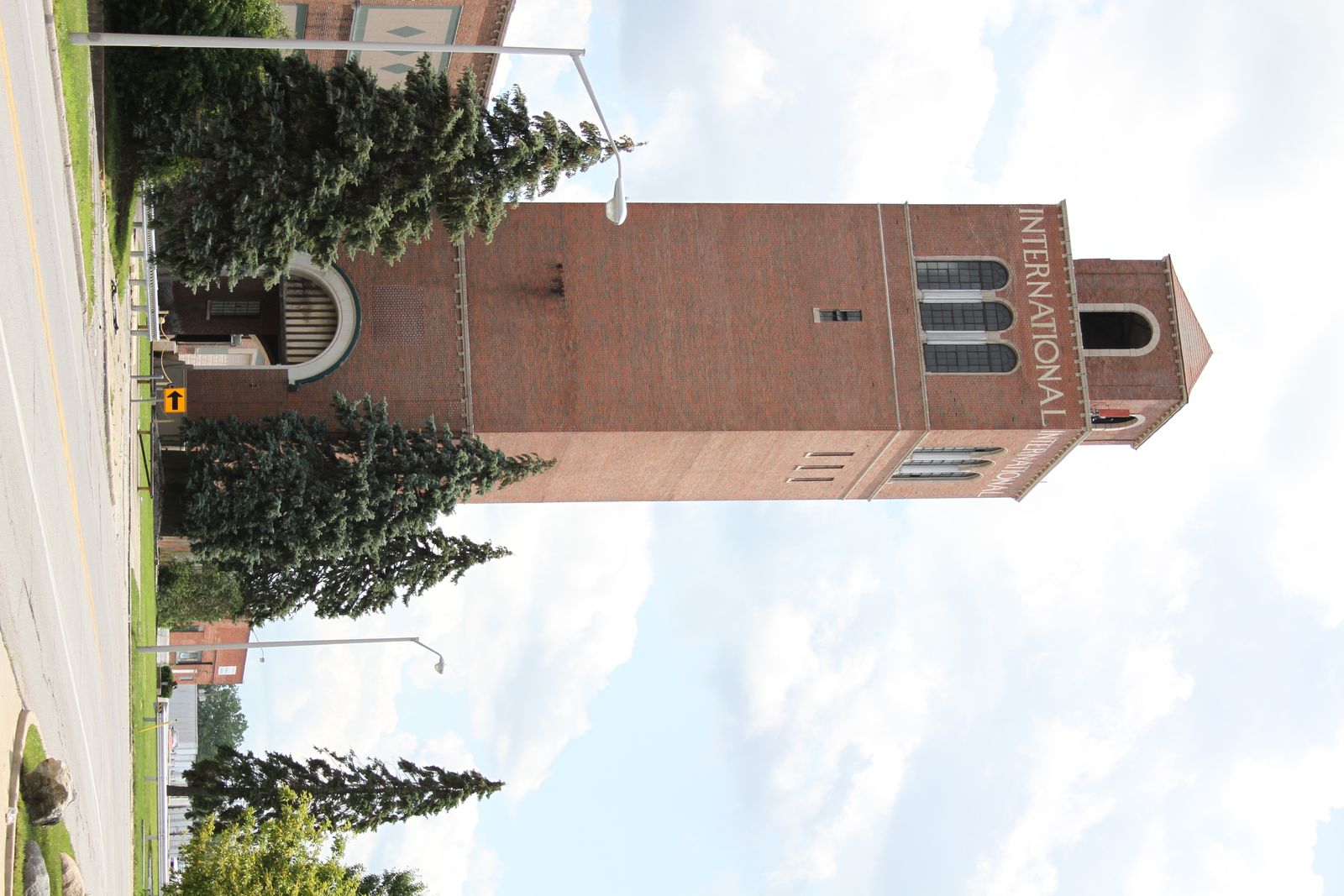
Fort Wayne's automobile history is, at its documented core, a truck story with a brass-era prelude. The city built cars under its own marques for only about a decade — a carriage house's automobile of 1899–1900 and a highwheeler buggy company of 1908–09 — and then, in 1923, International Harvester opened the plant that made it, in the local record's own phrase, the Heavy-Duty Truck Capital of the World: 1,527,299 medium and heavy trucks before the last one rolled out in 1983, and beside them, from 1960 to 1980, the Scout, designed in Fort Wayne and built here 532,674 times. General Motors' Fort Wayne Assembly at Roanoke has built pickups since 1986 and passed its ten-millionth vehicle in 2023. Around those plants grew the rest of the record this section holds: the contested question of the first car, the Columbia Street agencies, the filling stations and the gasoline pumps Fort Wayne itself manufactured, the Lincoln Highway's route through downtown, the dealer families of the postwar rows, and the drive-ins and cruising loops of the car culture. What does not verify — two further marques a columnist named, a local Dixie Highway, a dated first traffic light — is printed here as not verified, at its true size.
The first automobiles: three claims, and no crown
1897 – 1910
The claim the histories carried: Bert J. Griswold's Pictorial History of Fort Wayne (1917), repeating the Fort Wayne Sentinel's pictorial-history installment of 31 October 1914, states the matter flatly: "H. W. Meyer brought the…
The homebuilders: cars constructed here, one at a time
c. 1900 – 1905 and after
Built, not bought: Before Fort Wayne had a car company it had car builders. The 1910 News item above credits Marion Black and Will Peltier with constructing a car — a one-off machine, assembled by two of the city's earliest…
Roach & Albanus: the carriage house that built an automobile
1899 – 1900
The firm: Roach & Albanus was a Fort Wayne carriage house. The 1900 Polk directory lists "ROACH & ALBANUS, 11-13 Clay" among the city's classified businesses, with Carl L. Albanus living at 63 West Jefferson. In May 1900 the firm…
The Economy Motor Buggy Company: Fort Wayne's motor-buggy factory
1908 – 1909 in Fort Wayne; the marque to 1911–12
The company: The Economy Motor Buggy Company was founded in Fort Wayne in 1908 to build highwheelers — motor buggies on tall, carriage-style wheels, chain-driven, sold to a countryside still suspicious of pneumatic tires on mud…
"The Wayne" and "the Huffman": two marques that do not verify
Claimed for the brass era; tested 2026
The claim: A Cliff Richards column in the Journal Gazette, preserved by local historian Bob DeVinney and quoted in the News-Sentinel's 2000 history of the period, names the Economy "along with the two other makes of cars once…
Columbia Street: the first garages and agencies
1902 – 1920
The first commercial garage: The trade began, as it did in most American cities, in a bicycle shop. Alfred C. Randall had been in the bicycle business since 1893; in 1902 he switched to an automobile garage and salesroom. A…
Jitneys, gasoline, and the law of the street
1902 – 1921
The horse's objection: The transition was contested in the street itself. By 2 September 1902 the Journal Gazette was reporting horses' antipathy to the new machines as a standing problem of city traffic, and the livery trade…
The Lincoln Highway, the motor club, and the highway that never came
1913 – 1928
The Lincoln Highway through town: The Lincoln Highway, announced in 1913 as the first transcontinental automobile road, crossed Allen County for 33.5 miles and made Fort Wayne the largest Indiana city on its route. The Indiana…
The Fort Wayne Works: sixty years of trucks
1922 – 1983
The plant: In 1922 the International Harvester Company began construction on the east side of Fort Wayne, at East Pontiac Street and Bueter Road; production began in 1923. The Fort Wayne Works became the company's heavy-truck…
The truck plant at war: the M-5-6 and the Lend-Lease line
1941 – 1945
Fort Wayne's war truck: When the Army standardised its 2½-ton 6×6 cargo truck designs in 1940–41, International Harvester's design — the M-5-6 — was put into production at Fort Wayne in 1941. Five hundred M-5-6s and 3,000…
The Scout: designed in Fort Wayne, built in Fort Wayne
1960 – 1980
The design, and where it happened: The Scout is the one Fort Wayne vehicle whose design is as local as its manufacture, and the attribution was tested rather than assumed. Ted Ornas, the Scout's chief designer, was recruited from…
After the Scout: collapse, Homecoming, and a revival in South Carolina
1980 – present
Why it ended: The Scout did not fail out of the market; its maker failed around it. International Harvester entered the 1980s in collapse — sustained losses through the fiscal years 1980–84 and a crippling strike in 1979–80 among…
GM Fort Wayne Assembly: the living plant, at its true address
1986 – present
Where it actually is: The plant General Motors calls Fort Wayne Assembly does not stand in the city of Fort Wayne. Its address is 12200 Lafayette Center Road, Roanoke, Indiana 46783 — a Roanoke mailing address — and the plant…
The dealer trade after Columbia Street
1920s – present
Downtown's long tail: The trade stayed downtown for decades after the Columbia Street beginnings. The Poinsatte Auto Company, a Chrysler-Plymouth dealer, was photographed across the 1920s, 1930s, and 1940s in the Allen County…
The supplier web: the pumps Fort Wayne sold the world, and its axles
1885 – present
The gasoline pump is a Fort Wayne product: The automobile ran on fuel that had to be measured, and Fort Wayne built the machines that measured it. S. F. Bowser sold his first pump — a self-measuring pump for kerosene — in Fort…
Drive-ins and the cruise: the car as the evening's room
1947 – 1991
The drive-in theatres, car side: The picture shows themselves belong to the Theaters section; what belongs here is that they were buildings for automobiles — a screen, a ramped field, and a city's worth of cars as the auditorium.…
