The exact page text, read by your browser's voice.

Fort Wayne's documented music begins in church, with the small four-stop organ Trinity Episcopal owned in 1848, and it quickly became a German chorus: on 4 October 1869 immigrants organized the Sängerbund, the first of eight German singing societies the city would hold. Music was also manufacture. Isaac T. Packard, whose Chicago organ business was destroyed in the Great Chicago Fire of 1871, came to Fort Wayne (by local tradition, getting off the train where his fare ran out) and built the Fort Wayne Organ Company and the Packard piano works with the backing of prominent local investors. Before radio, the loudest public music was brass, and the 1878 directory's band listing names a municipal band, a commercial band and parish bands in a city of thirty thousand. The orchestral line runs from John L. Verweire's symphony of 1924 through the Civic Symphony of 1928 to the Philharmonic, and the section keeps each institution's founding, failure and refounding in order.
First music: the churches and the first organ
1848 — the nineteenth century
Sacred first: Fort Wayne's documented music begins, as it did in most American towns, in church. The earliest documented church organ in the city is the small four-stop instrument owned by Trinity Episcopal Church in 1848 and…
The singing societies: Fort Wayne's German chorus
Organized 4 October 1869 — still singing
Eight choruses, one line: On October 4, 1869, German immigrants organized the Fort Wayne Sängerbund, the city's first German male chorus, dedicated from the start to preserving German heritage as expressed in choral music. It was…
A city that built instruments: the Fort Wayne Organ Company and Packard pianos
1871 — 1930
Music as manufacture: Fort Wayne's largest nineteenth-century music institution was a factory. Isaac T. Packard was a Chicago organ builder whose business was destroyed in the Great Chicago Fire of October 1871; local tradition…
The band era: brass in the parks
1878 — today
Everybody had a band: Before radio, the loudest public music in Fort Wayne was brass, and it was organized. The 1878 city directory's "Bands of Music" listing names the Fort Wayne City Band (brass and string), Leifels' Band, the…
The first orchestras: Verweire and the Civic Symphony
1924 — 1944
Before the Philharmonic: Fort Wayne had a symphony orchestra twenty years before it had the Philharmonic. In January 1924, conductor John L. Verweire founded the Verweire Symphony Orchestra, the city's first attempt at a…
The Fort Wayne Philharmonic
Founded 1944 — the city's orchestra
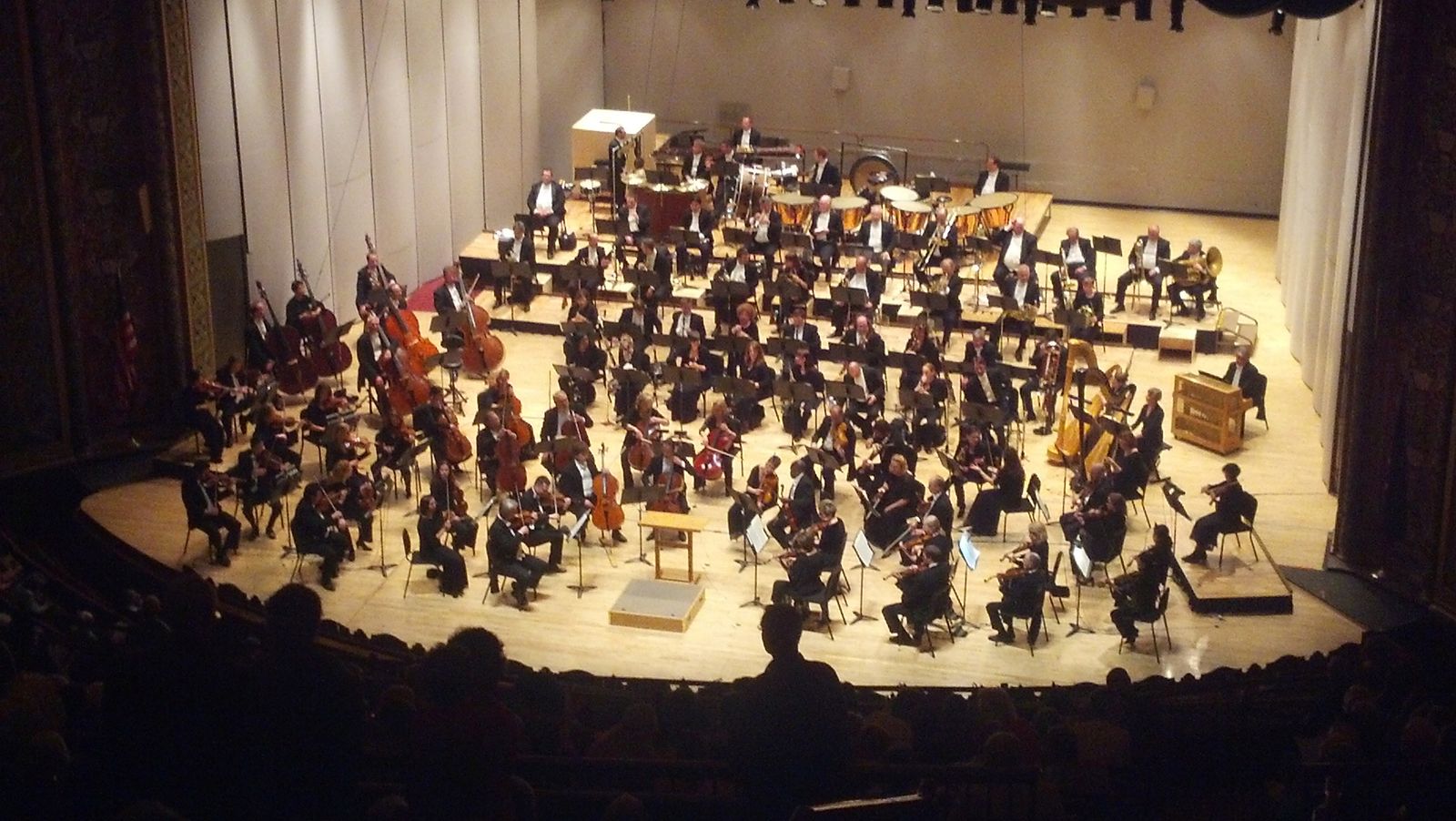
A society, then an orchestra: The Fort Wayne Philharmonic was founded in 1944 as the Philharmonic Society of Fort Wayne, Inc., organized by citizens under Carl Light, the society's first president, who wanted to raise the…
The Philharmonic in the 2020s: furlough, strike, and a new home
2020 — 2026
The hardest years, then a door of its own: The Philharmonic's eighth decade opened with its worst labor troubles. Musicians had taken a 17.5 percent salary cut in 2013; in the pandemic they agreed to further cuts that brought…
Miss Page: the Embassy's Grande Page organ
Installed 1928 — still playing
Not a Wurlitzer: The Embassy Theatre's famous organ is a Page — a Grande Page theatre pipe organ of four manuals and fifteen ranks, built by the Page Organ Company of Lima, Ohio, and installed when the theatre opened as the…
The summer stage: Foellinger Theatre
Built 1949 — Franke Park
Music under the sky: In 1949 Helene Foellinger, publisher of the News-Sentinel, gave Fort Wayne an open-air theatre in Franke Park in memory of her father, Oscar G. Foellinger, the paper's former publisher. The Foellinger Theatre…
The Clyde: one room, two music lives
Opened 1951 — reborn 2018
Movie palace to concert hall: The Quimby family's second great Fort Wayne room opened on April 19, 1951, at 1808 Bluffton Road in Quimby Village: the Clyde Theatre, designed by A. M. Strauss — the Emboyd's architect …
The big room: landmark concerts at the Memorial Coliseum
1952 — today
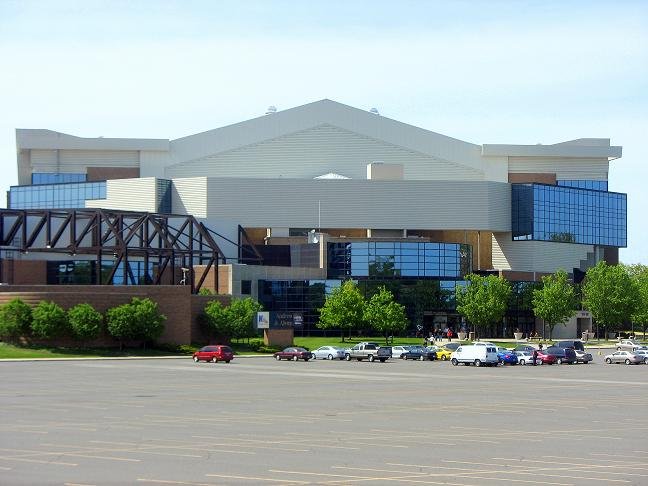
The arena years: The Allen County War Memorial Coliseum — dedicated September 28, 1952, as the county's memorial to its war dead, a history carried in the War Heroes and Famous Locations records — was for half a century the…
The garage era: bands, radio studios, and records of their own
1965 — the 1970s
Cut at the radio station: Fort Wayne's rock-and-roll generation mostly did not get record contracts, and its surviving record is wonderfully concrete: singles cut in radio-station studios and pressed in small runs. The Shadows 5…
Black Fort Wayne's music: the ballroom record
The twentieth century — an honest, thinner record
What the record holds: Every American city of Fort Wayne's size had a Black entertainment circuit in the segregation decades, and Fort Wayne's is documented more thinly than it deserves — a gap this entry states rather than…
Young voices: the Children's Choir and the youth orchestras
1973 — today
The training ground: Fort Wayne's most durable music-education institution began in a Catholic school music room. In 1973, music teacher Jocelyn Basse founded the Children of Peace Choristers to give area children the choral time…
Sweetwater: the studio that became an industry
Founded 1979 — the music business's Fort Wayne chapter
From a VW bus: Sweetwater began as a recording studio. Chuck Surack, a touring saxophonist who wanted off the road, founded the company in Fort Wayne in 1979, making location recordings of local bands with a TEAC four-track…
The scene today: festivals and free nights
2016 — today
A festival of its own: In September 2016 Fort Wayne acquired the thing its music scene had never had: a destination festival. Middle Waves, created by community volunteers — Matt Kelley and Beth McAvoy among its co-chairs — and…