The exact page text, read by your browser's voice.

Fire & Public Safety · the institutions
Before Fort Wayne had a fire department it had a petition. This section tells the story of the service that petition started: the bucket-and-ladder town of the canal years, the volunteer companies that made firefighting a civic sport and a civic quarrel, the steamers and the alarm telegraph, the paid department that replaced the volunteers in 1881–82, the houses the companies lived in, and the fires by which the city still measures the service — above all the Aveline House fire of 1908. The police force's beginnings follow in a single entry; the Government section carries the marshal's office and the chiefs' succession in full. The section closes with the two utilities on which safety itself depended: water to fight with, and light to see by.
Buckets, hooks and ladders — the first fire company
1833–1849 · THE TOWN DECIDES TO FIGHT FIRE
The petition: The first step toward a fire department in Fort Wayne was taken on 1 March 1833, when fifteen citizens — James Barnett, Samuel Edsall, William N. Hood, Dr. L. G. Thompson, Henry Rudisill, James Daniels, Joseph…
The Anthony Waynes and the rival companies
1839–1874 · THE VOLUNTEER ERA
The first fire house: Five years after the 1834 organization, the town leased from William G. Ewing, for three years at six dollars a year, a part of lot 70 of the original plat, at the northeast corner of Clinton and Main…
Steamers, the alarm telegraph, and the paid department
1856–1882 · PROFESSIONALIZATION
A chief over the volunteers: It was not until 1856, Griswold writes, that the city took official recognition of the department: a fire chief was appointed — L. T. Bourie — "whose supervision extended over such volunteer companies…
The houses
1839–1972 · THE STATIONS IN BRIEF
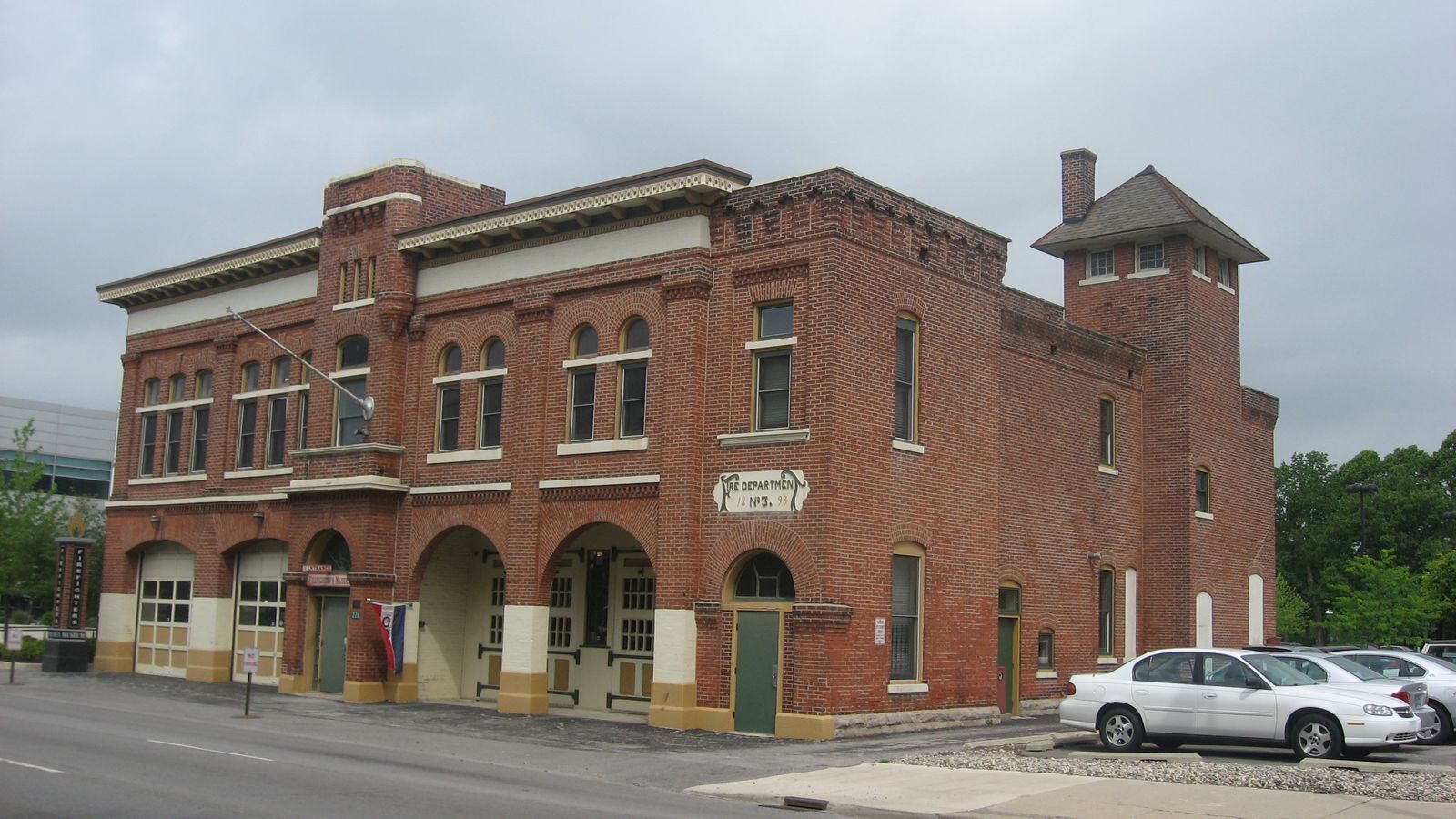
The first houses: The service's first home was the wooden fire house of 1839 on William G. Ewing's lot at Clinton and Main, replaced in 1845–46 by the $337.78 engine house on city property. In 1860 the Second Ward engine house…
The fires that marked the city
1882–1974 · SINGLE BUILDINGS, NOT A CONFLAGRATION
The pattern: Fort Wayne never had its Chicago fire. The wooden town of the fire limits burned building by building, and its fire memory is a ledger of single addresses. On the evening of 16 December 1882 the First Presbyterian…
The watch, the policemen, and the force of 1863
1834–1863 · THE POLICE IN BRIEF
The marshal's town: For its first decades Fort Wayne was kept by the sheriff, the constables and the city marshal — an elected town officer from 1830 whose succession, with the police chiefs' after 1863, is carried in the…
Water and light — the utilities of safety
1855–1881 · WHAT THE DEPARTMENT FOUGHT WITH, AND SAW BY
Canal water and cisterns: For many years the fire department drew its water by laying long lines of hose to the canal. As the building area spread beyond the canal's reach, the city built cisterns at the distant points; they grew…