The exact page text, read by your browser's voice.
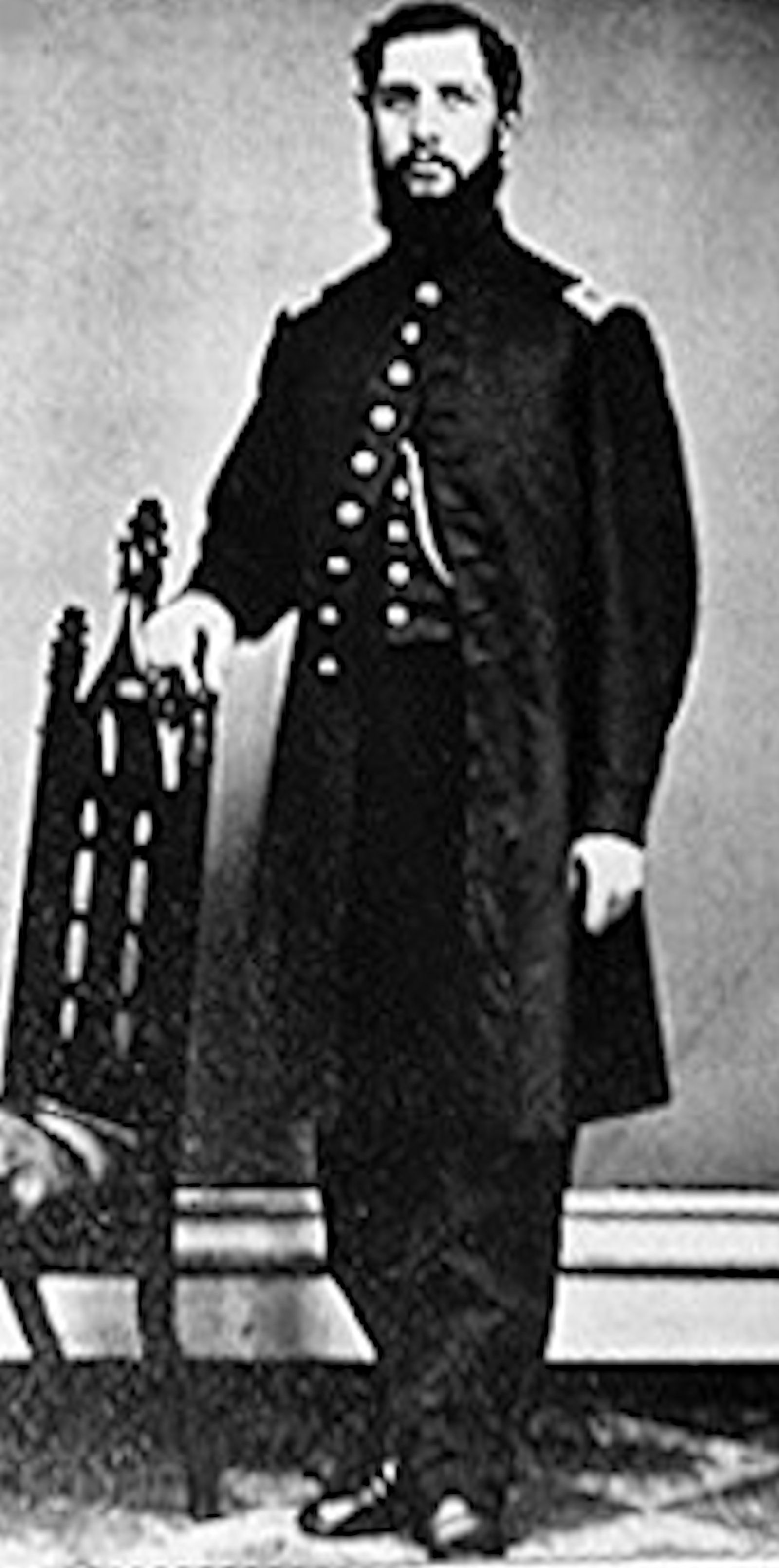

War Heroes · the decoration record and the honor rolls
This section holds the county's honor record: the men and women of Fort Wayne and Allen County who were decorated for valor, and the rolls on which the county has written the names of its dead. It is built only from citation-grade sources — the Congressional Medal of Honor Society's recipient database, the citations as published in War Department and service general orders and carried in the Military Times Hall of Valor, the county rosters, and the memorials themselves. Full lives belong to the People record, battles and campaigns to the Wars record, and units and bases to the Military record; what belongs here is the decoration, the act as the citation states it, and the roll of honor. A hometown claim is the weakest link in every hero list, so each name below carries its connection stated plainly — birth, entered service, accredited to, home of record, or burial — with its source. Bronze Star Medals are not listed by name: they were awarded to Allen County servicemembers in the thousands across the Second World War and after, no complete county list exists in any source reached, and printing a partial one would misstate the record. Every Medal of Honor recipient found for this county in the Society's database earned the medal in the Civil War; no recipient of any later war with an Allen County connection was found in the Society's database, and the file says so rather than borrowing names from other counties' lists.
The Medal of Honor · Henry Ware Lawton
ATLANTA, GEORGIA · 3 AUGUST 1864 · ENTERED SERVICE AT FORT WAYNE
Henry Ware Lawton was born on 17 March 1843 at Manhattan, Ohio, near Toledo, and raised in Fort Wayne — the History Center's word is that he was the first man from Fort Wayne to earn the medal, and the Army's record of the award ties him to the city directly: he entered service at Fort Wayne and served as captain of Company A, 30th Indiana Infantry. His citation, issued 22 May 1893, reads: "Led a charge of skirmishers against the enemy's rifle pits and stubbornly and successfully resisted 2 determined attacks of the enemy to retake the works." Lawton stayed in the Regular Army, led the 1886 pursuit that brought about Geronimo's surrender, and was killed at San Mateo in the Philippines on 19 December 1899, a major general of volunteers — the only American general officer killed in the Philippine–American War. His life is in the People record; his honors here are the medal, the park renamed for him in 1899, the Civil War monument ground in that park, and the bronze statue the city dedicated to him in Lakeside Park on 22 October 1921. He is buried at Arlington.
Sources: U.S. Army Medal of Honor citation record (rank and organization, place and date, entered service, date of issue); Congressional Medal of Honor Society recipient record; The History Center (Castaldi, "Henry W. Lawton"); City of Fort Wayne Parks & Recreation, Fort Wayne Monuments Plaques and Markers (2020) for the statue.
The Medal of Honor · Joseph Rollin Prentice
STONES RIVER, TENNESSEE · 31 DECEMBER 1862 · ACCREDITED TO FORT WAYNE
Joseph Rollin Prentice was a private in Company E of the 19th U.S. Infantry — a regular regiment in which Allen County men also served, as the Wars roster records. The Congressional Medal of Honor Society's record accredits him to Fort Wayne, Allen County, and his citation reads: "Voluntarily rescued the body of his commanding officer, who had fallen mortally wounded. He brought off the field his mortally wounded leader under direct and constant rifle fire." The medal was presented on 3 February 1894. Prentice was born on 6 December 1838 at Lancaster, Ohio — his connection to this county is the Army's accreditation, stated as such — and he died on 7 August 1908 at Colorado Springs, Colorado, and is buried at Hebron, Nebraska. His medal itself is held at Stones River National Battlefield.
Sources: Congressional Medal of Honor Society, recipient record for Joseph R. Prentice (unit, action date and place, citation, accredited to, presentation date, birth, death, burial, location of medal).
The Medal of Honor · Allan Houston Dougall
BENTONVILLE, NORTH CAROLINA · 19 MARCH 1865 · ACCREDITED TO NEW HAVEN, ALLEN COUNTY
Allan Houston Dougall was first lieutenant and adjutant of the 88th Indiana Infantry, one of the county's own regiments. The Society's record accredits him to New Haven, Allen County, and his citation reads: "In the face of a galling fire from the enemy he voluntarily returned to where the color bearer had fallen wounded and saved the flag of his regiment from capture." The medal was presented on 16 February 1897. Dougall was born on 17 July 1836 at Glasgow, Scotland; he died on 22 May 1912 at Fort Wayne and is buried in the I.O.O.F. Cemetery at New Haven. The county genealogical society's account of his National Archives file adds a documented coda: Dougall guarded the medal so carefully that he did not wear it in public until an 1897 parade for the new courthouse, and pieces of the damaged original remain in his file at the National Archives.
Sources: Congressional Medal of Honor Society, recipient record for Allan H. Dougall; Allen County Genealogical Society of Indiana, Civil War records for Allen County (the National Archives file account).
The Medal of Honor · George Lovell Banks, and a conflict in his record
MISSIONARY RIDGE, TENNESSEE · 25 NOVEMBER 1863 · HIS CONNECTION IS DISPUTED BETWEEN OFFICIAL LISTS
George Lovell Banks was color sergeant of Company C, 15th Indiana Infantry, and his citation is among the famous ones of the Chattanooga campaign: "As color bearer, led his regiment in the assault, and, though wounded, carried the flag forward to the enemy's works, where he was again wounded. In a brigade of eight regiments this flag was the first planted on the parapet." The medal was issued on 28 September 1897. His Allen County connection does not stand clean, and this section prints it as it stands: the Army's Medal of Honor list, as reproduced in the Indiana county records, gives "Entered service at: Allen County, Ind.," while the Congressional Medal of Honor Society's present recipient record gives "Accredited to: Lafayette, Tippecanoe County, Indiana." Banks was born in Lake County, Ohio, spent his youth in LaPorte County, and settled after the war in Kansas, where he died in 1924. He is carried here because one official record credits his service to this county — with the other official record's different answer printed beside it, for the reader to weigh.
Sources: U.S. Army Medal of Honor list entry for George L. Banks (entered service at Allen County), as reproduced in the INGenWeb Indiana recipients list; Congressional Medal of Honor Society, recipient record for George L. Banks (accredited to Lafayette) and the Society's account of the Missionary Ridge action, 25 November 2021; Medal of Honor certificate, War Department, 1916 (enrollment and award).
The Medal of Honor · Robert Stoddart Robertson, the county's by adoption
CORBINS BRIDGE, VIRGINIA · 8 MAY 1864 · A FORT WAYNE RESIDENT AND A LINDENWOOD GRAVE
Robert Stoddart Robertson's medal was earned in a New York uniform, and this section claims him only for what the record supports: he made Fort Wayne his home. A first lieutenant in Company K, 93rd New York Infantry, serving as an aide-de-camp, he won the medal at Corbins Bridge on 8 May 1864 — in the Society's citation, "seeing a regiment break to the rear, he seized its colors, rode with them to the front in the face of the advancing enemy, and rallied the retreating regiment." The Army's list dates the issue 2 August 1897; the county society's account records that Secretary of War R. A. Alger notified him on 26 July 1897, thirty-three years after the act. Robertson had moved to Fort Wayne with his wife in 1866, was elected lieutenant governor of Indiana in 1886, founded the region's first historical society, and wrote the first substantial history of the Maumee River basin. He died in August 1906 — the day is given variously as the 4th, the 24th and the 25th in the accounts reached, and is printed here as the month only — and is buried at Lindenwood Cemetery. His original medal disappeared; on 14 September 1989 the Allen County–Fort Wayne Historical Society obtained an official replacement from the Army's Military Awards Branch.
Sources: Congressional Medal of Honor Society, recipient record for Robert S. Robertson; U.S. Army Medal of Honor list entry (entered service at Argyle, N.Y.; date of issue 2 August 1897); Allen County Genealogical Society of Indiana, people record for Robert Stoddart Robertson (the 1866 move, the notification, Lindenwood burial, the 1989 replacement medal).
The first ace · Paul Frank Baer
FRANCE · MARCH–MAY 1918 · DISTINGUISHED SERVICE CROSS WITH OAK LEAF CLUSTER
Paul Frank Baer was born in Fort Wayne — on 29 January 1894, as the Air Force-credited accounts give it; one county account prints 1 January 1895. He left a job selling Cadillacs to join the Lafayette Flying Corps in 1917 and came to the 103d Aero Squadron of the U.S. Army Air Service. On 11 March 1918 he scored the first aerial victory of the American Air Service, attacking alone a group of seven enemy machines and destroying one, and the Distinguished Service Cross citation for that day says exactly that. A second award of the cross covered his victories of 5, 12 and 23 April and 8 and 21 May 1918. His fifth victory, on 23 April 1918, made him the first American ace of the United States Air Service. The Air Force's official victory study credits him with 7.75 enemy aircraft; the commonly printed account says nine confirmed and seven more unconfirmed, and both figures stand here as they stand in their sources. He was shot down on 22 May 1918 and spent the rest of the war a prisoner. France made him a chevalier of the Légion d'honneur and awarded him the Croix de Guerre. He died in an air crash at Shanghai on 9 December 1930 and is buried at Lindenwood. Fort Wayne had already named its new airport for him in 1925 — Paul Baer Municipal Airport, the field that became Baer Field.
Sources: Distinguished Service Cross citations for Paul F. Baer (War Department general orders, as carried in the Military Times Hall of Valor and the Military Hall of Honor); U.S. Air Force Historical Study No. 133, U.S. Air Service victory credits, WWI (7.75); Allen County Genealogical Society of Indiana, people record for Paul Frank Baer (the airport naming, the Lafayette service, the 1895 birth-date variant).
Three crosses in two wars · Chester John Hirschfelder
ST. ETIENNE 1918 · NORMANDY 1944 · DISTINGUISHED SERVICE CROSS, THREE AWARDS; SILVER STAR, FOUR
Chester John Hirschfelder was born in Fort Wayne on 10 January 1894 and earned the Distinguished Service Cross in two world wars, a generation apart, in the same division. His first citation, as a captain in the 5th Machine Gun Battalion, 2d Division, near St. Etienne, France, on 4 October 1918, reads: "When an enemy machine gun was inflicting heavy casualties upon his company, Captain Hirschfelder crawled forward alone across a field exposed to heavy machine-gun fire and threw hand grenades into the enemy position. His action silenced the machine gun and prevented further casualties to his company." Twenty-six years later, as colonel commanding the 9th Infantry Regiment, 2d Infantry Division, he was awarded a second Distinguished Service Cross for the attack on a fortified ridge near St. Jean des Baissanis on 28 July 1944, and a third five days later, on 2 August 1944, in the advance on Tinchebray. The Hall of Valor record also carries his Silver Star with three oak leaf clusters — four awards of the Silver Star. He died on 24 August 1968.
Sources: Military Times Hall of Valor, recipient record for Chester J. Hirschfelder (first citation in full, War Department General Orders No. 53 (1920); second award, Headquarters, Ninth U.S. Army, General Orders No. 30 (1944); third award, 2 August 1944; Silver Star with three oak leaf clusters); Veteran Tributes and Military Hall of Honor records (birth at Fort Wayne, 10 January 1894).
The message delivered · William L. Gillespie
FOREST OF ARGONNE · 4 OCTOBER 1918 · DISTINGUISHED SERVICE CROSS, POSTHUMOUS
Private William L. Gillespie of Company G, 16th Infantry, 1st Division, was a Fort Wayne boy who had enlisted on 26 January 1917 and served on the Mexican border before France. His Distinguished Service Cross citation, in War Department General Orders No. 37 (1919), reads: "While carrying a message from the support to the firing line, Private Gillespie was severely wounded, but he continued on his mission and delivered his message." The Journal Gazette of 15 February 1919 carried the award to its readers with his mother's address — Mrs. W. R. Gillespie of Fort Wayne — and the Sentinel of 5 April 1919 reported the cross being forwarded to his parents at 622 Harrison Street. The citation dates the action 4 October 1918; the county accounts give his death in the days immediately after — 6 October in the burial record, "fatally injured Oct. 7" in the Sentinel's wording — aged seventeen, his eighteenth birthday three weeks away. The county genealogical society's record adds the French Croix de Guerre with Silver Star. The Army Reserve Center on Nuttman Avenue carries his name today: the PFC William L. Gillespie United States Army Reserve Center.
Sources: War Department General Orders No. 37 (1919), Distinguished Service Cross citation (posthumous); Fort Wayne Journal Gazette, 15 February 1919, and Fort Wayne Sentinel, 5 April 1919, as reproduced in the Allen County Genealogical Society of Indiana's people record for William L. Gillespie; ACGSI record (enlistment, border service, Croix de Guerre, the Reserve Center naming; death-date variants as printed there).
The double ace · Walker Melville "Bud" Mahurin, in brief
EUROPE 1943 · THE PACIFIC · KOREA · DISTINGUISHED SERVICE CROSS AND SILVER STAR
Mahurin's life is in the People record — born at Benton Harbor, Michigan, raised in Fort Wayne at 927 Wildwood Avenue, a South Side High School graduate who learned to fly at Smith Field — and only his decoration record stands here. His Distinguished Service Cross, in Headquarters, European Theater of Operations, General Orders No. 96 (16 December 1943), was for aerial combat on 4 October 1943 as a captain flying a P-47 with the 63d Fighter Squadron, 56th Fighter Group, escorting withdrawing bombers; the Together We Served printing of the citation records that he shot down three enemy aircraft in that single engagement. He also held the Silver Star — Purdue's account notes he was the first man of the 56th Fighter Group to receive it — the Distinguished Flying Cross with seven further awards, the Purple Heart and the British Distinguished Flying Cross. The Air Force's official credit studies give him 20.75 victories in the Second World War and 3.5 in Korea, 24.25 in all, the only Air Force pilot to score in Europe, the Pacific and Korea. Shot down over North Korea on 13 May 1952, he was a prisoner until September 1953.
Sources: Headquarters, European Theater of Operations, General Orders No. 96 (1943), Distinguished Service Cross citation; Air Force Historical Studies 85 and 81 (victory credits, WWII and Korea); Purdue University, College of Engineering (the Silver Star and the 56th Fighter Group); Military Hall of Honor record (the full decoration list).
The Navy Cross at Con Thien · Mark Warren Judge
QUANG TRI PROVINCE, VIETNAM · 21 SEPTEMBER 1967 · NAVY CROSS, POSTHUMOUS
Private First Class Mark Warren Judge, a rifleman in Company E, 2d Battalion, 4th Marines, 3d Marine Division, was point man of the lead fire team on a search-and-destroy mission near Con Thien when the team came under attack from a well-entrenched and concealed enemy force; the Navy Cross citation, awarded posthumously by the Navy Department Board of Decorations and Medals, opens with that ground. He was killed that day, 21 September 1967, aged twenty. The Marine Corps' official list of its Vietnam Navy Cross recipients carries his name. His connection to this county is stated with its limits: he was born at Fort Wayne on 28 June 1947 and his mother, Mary Jellison, lived in Fort Wayne; federal casualty compilations give his home city of record as Torrance, California. The Associated Press documented the rest of his story in 1996: the grave his mother had tended in Fort Wayne for twenty-eight years was exhumed that April and found, on the government's account, to hold another Marine of the same fight, Corporal William Berry, while remains returned by Vietnam in 1986 were identified as Judge's by DNA testing in 1994. The citation is the settled part of his record, and it is the citation this section prints.
Sources: Navy Cross citation for Mark W. Judge (Navy Department Board of Decorations and Medals), as carried in the Military Times Hall of Valor; U.S. Marine Corps, Navy Cross recipients, Vietnam War (official list, 2013); Associated Press, Fort Wayne, April 1996 (the exhumation and the identifications); POW Network casualty biography compiled from U.S. government sources (home city of record, Torrance, California).
Silver Stars, as the record reaches
THE SECOND WORLD WAR · TWO NAMES VERIFIED TO CITATION RECORDS
Below the cross level, this section prints the Silver Star names that citation records verify, and no more — the award was made too often for any county list reached to be complete, and an incomplete list presented as the county's roll would be a false record. Captain Wayne Leonard Bart, born at Fort Wayne on 2 April 1917 and a West Point graduate of 1942, received the Silver Star as an infantry captain of the 331st Infantry Regiment, 83d Infantry Division, for gallantry in the hedgerow fighting south of Carentan, France, in July 1944; the award stands in the Military Academy's Register of Graduates, carried in the Hall of Valor as a citation synopsis. Technical Sergeant Robert L. Barlow's connection is birth only, and is stated so: born at Fort Wayne, his home of record was Athens, Ohio. A bombardier of the 90th Bombardment Squadron, 3d Bombardment Group, he received the Silver Star for gallantry in the Southwest Pacific in 1942 and a second award, posthumous, for 26 July 1942, the day his B-25 crew was lost near the Philippines; his name is on the Wall of the Missing at Manila.
Sources: Military Times Hall of Valor, recipient records for Wayne L. Bart (U.S. Military Academy Register of Graduates) and Robert L. Barlow (Headquarters, Allied Air Forces in the Southwest Pacific Area, General Orders No. 12 (1942); Headquarters, 5th Air Force, General Orders No. 186 (1943); American Battle Monuments Commission, Manila).
The women on the rolls
1917–1918 · THE NURSES THE COUNTY SENT AND THE ONE IT NAMES
Hospital Unit M, organized at Fort Wayne in May 1917 — twelve physicians and twenty-one graduate nurses under Elizabeth E. Springer, directed first by Major Miles F. Porter and then by Dr. Allen Hamilton — is told in the home-front record, and the unit's two nurses who did not come home are carried in the Wars and Charities records. The nurse the county's Gold Star record names outright is Grace Glenn Buell, a Red Cross nurse who died of pneumonia on 8 October 1918 at Base Hospital No. 33, Portsmouth, England; she stands in the state's Gold Star Honor Roll among the county's dead, a nurse on the same roll as the infantry. The Memorial Park monument of 1928 was lettered for "soldiers, sailors, marines and nurses" — the county's own words on its own memorial. Irene Byron, the tuberculosis nurse who died in Red Cross service in 1917 and for whom the county sanatorium was named, is told in the Epidemics record and cross-referenced here in this line only.
Sources: Wars record (Grace Glenn Buell; the Memorial Park inscription); home-front record (Hospital Unit M's organization); Gold Star Honor Roll of Indiana, 1914–1918, Allen County section; Epidemics record (Irene Byron).
The honor rolls · how the county wrote the names
1882 · 1914–1918 · THE LISTS THEMSELVES
The county's first printed roll of honor is a newspaper's: the Fort Wayne Daily Gazette of 30 May 1882 — Decoration Day — published the "List of the Honored Dead Lying in Graves in Allen County and Under the Southern Sun," naming the Civil War dead by the cemeteries that hold them, Lindenwood first, and those in southern graves; the Genealogy Center's military-heritage pages carry the list still. For the First World War, the state's Gold Star Honor Roll of Indiana, 1914–1918, gives Allen County pages 18 to 39 of the state volume; the county genealogical society's summary of the roll is "over 100" names, and Isabelle H. Taylor's History of Allen County in the World War (1920) carried the county's service and casualty rosters home in book form the year after the war. The county's modern roll is the genealogical society's 20th-Century Allen County Veterans Honor Roll, a name-by-name compilation still growing, built from service records, obituaries and family submissions.
Sources: Fort Wayne Daily Gazette, 30 May 1882 (Roll of Honor), via the Allen County Public Library Genealogy Center, Our Military Heritage; Gold Star Honor Roll of Indiana, 1914–1918 (Allen County section, pp. 18–39); Taylor, History of Allen County in the World War (1920); Allen County Genealogical Society of Indiana, 20th-Century Allen County Veterans Honor Roll.
The rolls in stone and bronze
1894 · 1928 · 1952 · WHERE THE NAMES STAND TODAY
The county's Civil War monument stands in Lawton Park — "Tribute for patriotic citizens of Allen County who fell in defense of the Union 1861–1865," naming Chickamauga, Vicksburg and Gettysburg — dedicated 10 October 1894 on the History Center's account; the Historical Society's 1964 guide gives 20 April 1893, and both dates stand in the Wars record. For the First World War, the World War Veterans Monument at Memorial Park, dedicated 12 November 1928, carries on bronze tablets inside its marble arches the names of all the county's soldiers, sailors, marines and nurses who died — the permanent memorial the Gold Star parents had been promised when the courthouse-square arch came down. The Second World War's dead were joined to the First's on a single roll: when the Allen County War Memorial Coliseum was built as the county's memorial — proposed in 1944, cornerstone laid November 1951, dedicated 28 September 1952 — its Memorial Hall roll of honor was compiled from War Department records and published in both of the city's newspapers so families could correct it before it was cast. As compiled, the roll carried 643 names for the First and Second World Wars combined, a total its own history says has since been increased by the casualties of the Korean conflict. No sourced split of the 643 by war was found, and this section does not invent one. Smaller rolls stand beside the county's: General Electric's employee memorial at McCullough Park on Broadway names the company's own dead of both world wars.
Sources: Otto H. Adams, The Allen County War Memorial Coliseum (Public Library of Fort Wayne and Allen County, 1953; Project Gutenberg no. 65372) — the roll's compilation and the 643 figure; Wars record (the 1894 monument and its two dedication dates; Memorial Park, 12 November 1928; the GE memorial).
The totals that do not exist
KOREA · VIETNAM · AN OPEN ENTRY, KEPT OPEN
This section prints no Allen County death total for the Korean or the Vietnam war, because no source reached compiles one. Named dead of both wars are printed in this project where sources name them — Mark Judge stands above — but a county total assembled from memorial counts, bonus lists or newspaper tallies would be an estimate wearing a roster's clothes. The route to the real figures is named in the Sources record: the National Archives' casualty files, sortable by home county. Until that pull is made, the honest entry is this one.
Sources: this history's open-questions card, "The county's Korea and Vietnam dead, as a total"; the wars record.